

Red flags for supplements: What to watch for
Table of Contents
- Red flags for supplements: The essentials
- How to verify supplement quality
- Supplement label reading guide: What matters
- Third-party supplement testing UK standards
- Manufacturer claims and certifications to trust
- Common ingredient warning signs
- Your checklist before buying supplements
- Frequently Asked Questions
Last Updated: September 22, 2026
Red flags for supplements: The essentials
Spotting red flags for supplements before you buy can save you from wasting money on ineffective products or, worse, putting your health at risk. The supplement industry is vast and largely self-regulated, which means not every product on the shelf meets the same quality standards. At Supplements Sanctuary, we've been established since 2014, and the patterns are clear: knowing what to watch for makes all the difference.
The most common issue isn't fraud, it's inconsistency. A supplement might contain what the label claims, but the dose could be wrong, the ingredient sourcing questionable, or the manufacturing process lacking proper controls. Other times, manufacturers make claims that go far beyond what the evidence actually supports. Understanding these red flags for supplements puts you in control of your purchasing decisions.
This guide walks you through the specific warning signs to watch for, how to read labels properly, and what certifications actually matter in the UK market. By the end, you'll have a practical checklist you can use every time you're considering a new supplement.
How to verify supplement quality
The first step in avoiding poor-quality supplements is understanding how to check what you're actually buying. This means looking beyond the brand name and marketing claims to examine the actual product.
Start with the manufacturer. A reputable supplement company will be transparent about where their products are made and how they're tested. Look for statements about manufacturing facilities, ideally ones that mention compliance with UK and EU food supplement regulations. Companies that hide their manufacturing location or use vague language like "made to pharmaceutical standards" without specifics are raising a red flag.
Batch traceability matters more than most consumers realise. If a company can't tell you where specific ingredients came from or can't trace your batch back to its raw material sources, that's a concern. Supplements Sanctuary, for example, maintains full batch traceability for all raw materials. This level of transparency isn't standard, but it's becoming more expected among health-conscious buyers.
Check whether the company publishes independent test results. Third-party testing is one of the strongest indicators of quality. If a manufacturer claims their products are tested but won't share the actual results, ask why.
Supplement label reading guide: What matters
Your supplement's label tells you far more than most people realise. Learning to read it properly is essential for spotting red flags for supplements early.
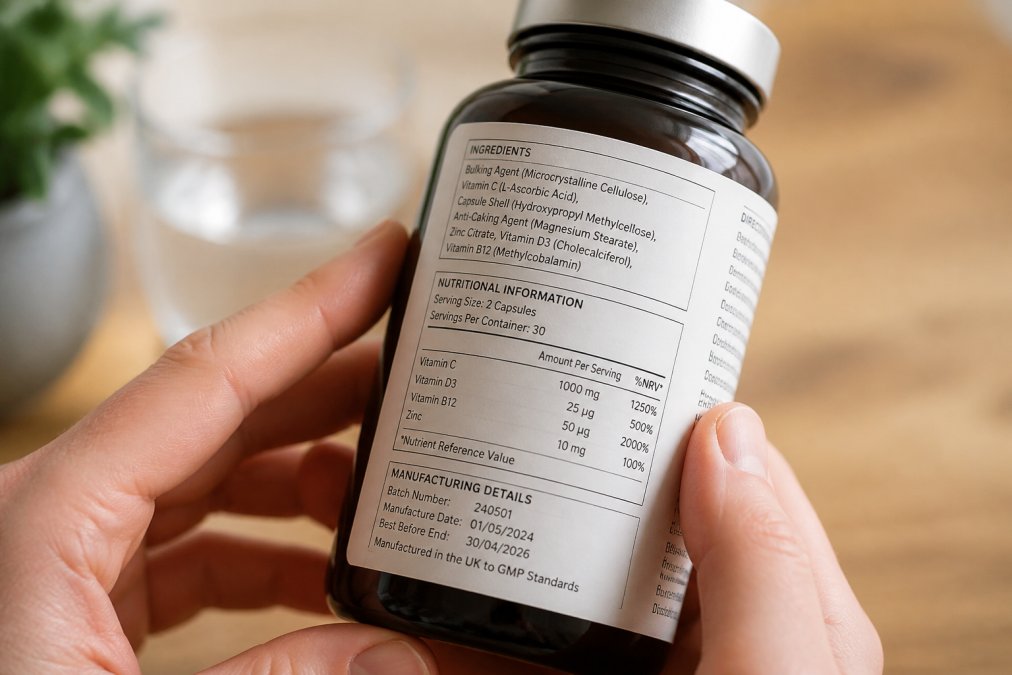
Start with the ingredient list. Every ingredient should have a quantity listed next to it, usually in milligrams (mg) or micrograms (mcg). If quantities are missing or vague (like "proprietary blend" without breakdown), you can't verify whether you're getting a therapeutic dose. Proprietary blends are a particular red flag because they allow manufacturers to hide the actual amounts of individual ingredients behind a total blend weight.
Next, check the "other ingredients" section. This lists binders, fillers, and additives. Common ones like microcrystalline cellulose or magnesium stearate are generally fine, but watch for unnecessary additives or ingredients you don't recognise. If the label lists artificial colours, excessive sweeteners, or preservatives you can't identify, that's worth questioning.
The "directions for use" should be clear and specific. If a label says "take as needed" or gives an extremely broad range (like "1-10 capsules daily"), that's vague. Proper dosing instructions reflect testing and evidence about how much of the supplement is actually needed.
Look for the manufacturing date and expiry date. Supplements do degrade over time, especially if stored improperly. If either date is missing or unclear, that's a red flag. Also check the storage instructions, if none are provided, the manufacturer hasn't bothered to consider how their product should be kept.
Finally, examine any health claims on the packaging. In the UK, supplement companies are strictly regulated about what they can claim. Phrases like "cures," "treats," or "prevents" are illegal for supplements, only medicines can make those claims. If a supplement label makes disease claims, it's either mislabelled as a medicine or the company is breaking the law.
Third-party supplement testing UK standards
Third-party testing is one of the most reliable ways to verify that red flags for supplements aren't hiding in your product. In the UK, several standards and testing bodies provide independent verification.
According to UK Food Standards Agency guidance on food supplements, supplements must comply with strict regulations around contaminants, labelling, and ingredient safety. However, compliance testing and voluntary third-party testing are different things. Compliance means meeting the legal minimum; third-party testing often goes beyond that.
Look for testing that covers several areas: ingredient identity verification (confirming the supplement actually contains what's listed), potency testing (verifying the dose is accurate), and contaminant screening (checking for heavy metals, microbial contamination, or pesticide residues). Heavy metal contamination is a particular concern in supplements, especially those containing herbal ingredients or mineral-based products.
In the UK, you might see references to standards like the British Pharmacopoeia, which sets quality standards for medicinal substances and some supplements. Products tested to these standards carry more credibility than those with no external verification.
Some testing bodies publish their results publicly, which is ideal. If a company claims third-party testing but won't share the actual certificates or results, that's suspicious.
Manufacturer claims and certifications to trust
Not all certifications carry equal weight. Some are marketing tools; others genuinely indicate rigorous quality control.
The most meaningful certifications for UK supplements include compliance with the Food Standards Agency regulations for food supplements and adherence to the British Pharmacopoeia standards. These aren't "badges" you see on packaging, they're legal requirements, but a manufacturer who explicitly mentions compliance is signalling they take these standards seriously.
Be cautious of vague certifications. Phrases like "pharmaceutical grade" or "medical grade" have no legal definition in the supplement industry. Any company can use them. Similarly, "natural" or "organic" claims require specific certification bodies backing them up. A supplement can't claim to be organic without proper certification from an accredited body.
Manufacturer claims about testing should be specific. A company claiming their products are "tested for purity" is vague. One claiming "tested for heavy metals, microbial contamination, and ingredient identity by [specific lab name]" is clear. The more specific the claim, the more likely it's backed by actual data.
Watch for red flags in how manufacturers describe their processes. Vague language like "made to high standards" or "quality assured" without specifics is a warning sign. Companies using transparent language will specify exactly what their quality control involves: batch testing, facility certifications, supplier audits, and so on.
Common ingredient warning signs
Certain ingredients or ingredient patterns should prompt closer inspection before you buy.
Fillers and binders aren't inherently bad, supplements need some to hold capsules together, but excessive amounts are wasteful. If a capsule is supposed to contain 500mg of an active ingredient but the capsule itself weighs 800mg, the difference is filler. Check the label to see what that filler is.
Some ingredients are red flags on their own. Certain herbal ingredients, particularly those imported from regions with less stringent environmental controls, can carry heavy metal contamination. If a supplement contains high-dose herbal ingredients from unclear sources, that's worth questioning.
Watch for ingredients listed as "extract" without further specification. A curcumin extract is fine; a "turmeric extract" without curcumin percentage listed is vague. Extracts should specify what compound you're actually getting and in what concentration.
Proprietary blends remain one of the biggest red flags for supplements. They allow manufacturers to list ingredients without showing how much of each you're getting. This makes it impossible to verify whether you're receiving a therapeutic dose or just a token amount to satisfy labelling requirements.
Synthetic versus natural forms of ingredients matter for some nutrients. For example, synthetic vitamin E (dl-alpha-tocopherol) is less bioavailable than natural forms (d-alpha-tocopherol). The label should specify which form you're getting. If it doesn't, that's worth asking the manufacturer about.
Your checklist before buying supplements
Use this practical checklist every time you're considering a new supplement. It takes five minutes and could save you from a poor purchase.
- Is the manufacturer clearly identified with a full address and contact information?
- Are all ingredients listed with specific quantities in mg or mcg?
- Does the label avoid vague terms like "proprietary blend" or "pharmaceutical grade"?
- Are storage instructions provided, and are manufacturing and expiry dates clear?
- Does the company publish third-party testing results?
- Are health claims limited to structure-function claims (not disease claims like "cures" or "treats")?
- Is the supplement made in a facility that meets UK and EU food supplement regulations?
- Can you verify the company's background and how long they've been operating?
- Are ingredients sourced from known, traceable suppliers?
- Does the dosage match evidence-based recommendations for that nutrient?
If you can't answer "yes" to most of these, reconsider the purchase.
Finding high-quality supplements shouldn't require a chemistry degree or hours of research. The challenge is that the industry includes everything from genuinely rigorous manufacturers to those cutting corners on quality.
Frequently Asked Questions
What are the most common red flags for supplements I should avoid?
The main warning signs include missing ingredient lists, vague dosage information, unsubstantiated health claims (like 'cures' or 'treats' specific diseases), lack of third-party testing information, and no batch traceability. Avoid supplements from brands that won't disclose their manufacturing location or provide batch numbers. UK-regulated supplements should clearly state they comply with food supplement regulations.
How do I verify supplement quality before buying?
Check whether the brand provides batch traceability. Look for UK or EU manufacturing credentials. Contact the manufacturer directly to confirm ingredient sourcing and ask for specific batch information. Established brands with 10+ years' trading history and published customer ratings offer additional confidence.
Why is third-party supplement testing UK important?
Third-party testing by independent laboratories verifies that supplements contain what the label claims and are free from harmful contaminants like heavy metals, microbial pathogens, and undeclared ingredients. In the UK, this testing ensures compliance with food safety standards. Many consumers worry about lead and other toxins in supplements. Independent testing provides objective evidence that a product meets safety thresholds, which the manufacturer's own testing cannot guarantee objectively.
What should I look for on a supplement label in the UK?
A trustworthy UK supplement label must list all active ingredients with clear dosages, the responsible operator's name and address, batch or lot number, expiry date, and storage instructions. It should state compliance with UK/EU food supplement regulations. Avoid labels with vague terms like 'proprietary blend' or missing ingredient percentages. The label should identify the country of manufacture. Beware of medical claims ('treats', 'cures', 'prevents') which are illegal on food supplements.