

How to Improve Gut Microbiome Naturally in 2026
Table of Contents
- What You'll Need Before You Start
- Step 1: Diversify Your Plant Intake to Improve Gut Microbiome Naturally
- Best Foods for Gut Microbiome Diversity
- Benefits of Prebiotic Supplements for Gut Health
- Step 2: Build Daily Habits That Support Your Microbiome
- How Long to Heal Gut Microbiome: Setting Realistic Timelines
- Common Mistakes to Avoid When Improving Gut Health
- Frequently Asked Questions
Last Updated: September 24, 2026
What You'll Need Before You Start
Improving your gut microbiome naturally is the practice of feeding and diversifying the trillions of bacteria already living in your digestive tract, rather than trying to replace them with a single product. The goal is variety, consistency and patience, not a quick fix.
This guide from Supplements Sanctuary covers the practical steps that matter most, from plant diversity to fermented foods and realistic timelines. Before you change anything, sort out three foundations:
- A food diary for one week. You cannot diversify what you have not measured. Note every plant, grain, legume, nut and seed you eat.
- A fibre target. Most adults fall short of the 30g daily fibre that the NHS Eatwell Guide recommends as part of a balanced diet.
- A realistic schedule. Microbiome shifts take weeks, not days. Plan for eight to twelve weeks before judging results.
Get these in place first. Everything below builds on them.
Step 1: Diversify Your Plant Intake to Improve Gut Microbiome Naturally
The single most effective way to improve gut microbiome naturally is to eat a wider range of plants, not simply more of the same ones. Different fibres feed different bacterial groups, so variety matters more than volume.
A common mistake is fixating on one "superfood" and eating it daily. In practice, that narrows your bacterial range. Rotate instead: swap your usual apple for a pear, your white rice for barley, your standard yoghurt for kefir.
The 30-Plant Rule and Why It Beats Counting Servings
The 30-plant rule is a simple tracking method: aim for 30 different plant types across a week, counting vegetables, fruits, wholegrains, legumes, nuts, seeds, herbs and spices. It beats counting servings because it measures breadth rather than bulk.
Herbs and spices count. So do tinned beans, frozen berries and mixed seeds. A lentil curry with six spices, onion, garlic, tomato and spinach adds ten plants in one meal. That is the point of the rule: it rewards variety you can actually achieve.
Best Foods for Gut Microbiome Diversity
The best foods for gut microbiome diversity combine fermentable fibre with live cultures. Fibre feeds existing bacteria; fermented foods introduce and support new ones. You need both.
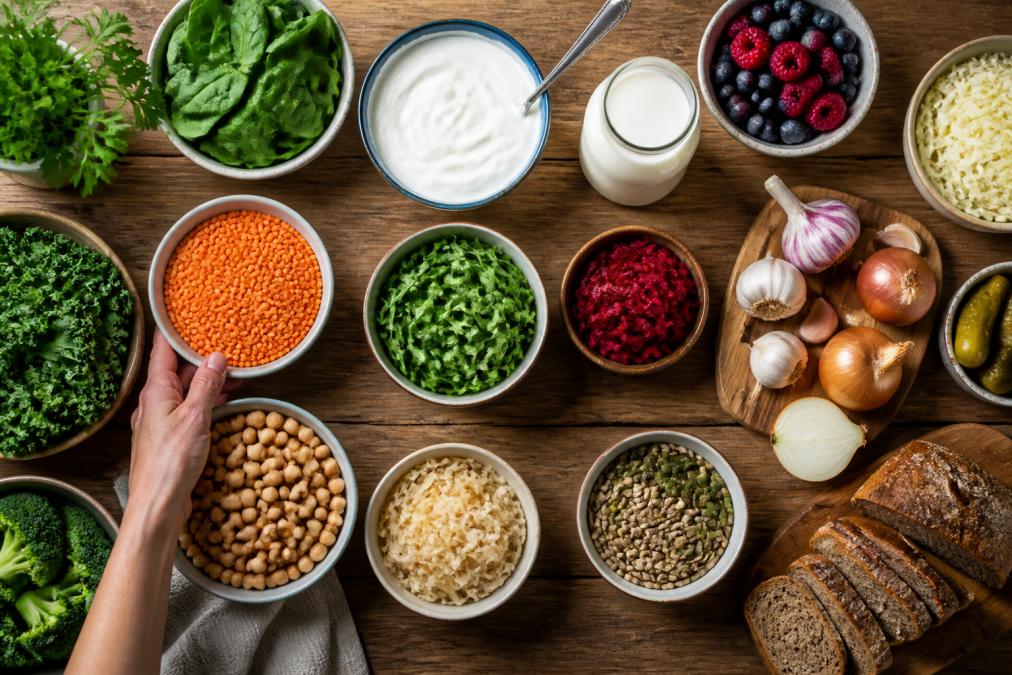
Fermented Foods and Fibre Sources That Do the Heavy Lifting
Fermented foods such as live yoghurt, kefir, sauerkraut, kimchi and miso carry beneficial bacteria. Fibre sources such as oats, barley, chicory root, onions, garlic, leeks, bananas and legumes supply the prebiotic fuel those bacteria need.
| Food Category | Examples | What It Does |
|---|---|---|
| Fermented | Kefir, live yoghurt, kimchi, sauerkraut | Adds live cultures |
| Prebiotic fibre | Garlic, onion, leeks, oats, barley | Feeds existing bacteria |
| Legumes | Lentils, chickpeas, black beans | Broad fibre variety |
| Nuts and seeds | Almonds, flaxseed, pumpkin seeds | Fibre plus healthy fats |
| Berries | Blueberries, raspberries, blackberries | Polyphenols and fibre |
Start with one fermented serving daily and two legume portions per week. Build from there.
Benefits of Prebiotic Supplements for Gut Health
The main benefits of prebiotic supplements for gut health are convenience and consistency: they deliver a measured dose of fermentable fibre when your diet falls short. They do not replace food, but they close gaps reliably.
Prebiotics differ from probiotics. Prebiotics are the fibre that feeds bacteria; probiotics are the live cultures themselves. Many people benefit from both, particularly during travel, illness or antibiotic recovery when diet quality slips.
For a combined approach, pb-sin 18 from Supplements Sanctuary pairs 10 billion CFU of live cultures across seven strains with prebiotic fructooligosaccharides in a single vegan capsule. At £29.99 for 60 capsules, it covers two months at one capsule daily on an empty stomach. The batch traceability and UK manufacturing standards behind it matter if you have ever wondered what is actually inside a probiotic capsule.
pb-sin 18 18 Probiotic & Prebiotic →

Step 2: Build Daily Habits That Support Your Microbiome
Consistency outperforms intensity when it comes to gut health. A modest daily routine beats an occasional large effort, because bacterial populations respond to repeated exposure rather than one-off changes.
Build these habits into your week:
- Eat one fermented food serving daily
- Add one new plant type every few days
- Drink water with meals rather than fizzy drinks
- Eat meals at roughly the same times each day
- Include a 30-minute walk after your largest meal
- Sleep seven to eight hours where possible
Sleep and movement influence digestion more than most people expect. The British Nutrition Foundation notes that overall dietary patterns, not isolated ingredients, drive long-term gut health.
How Long to Heal Gut Microbiome: Setting Realistic Timelines
Most people notice initial changes in two to four weeks, but meaningful shifts in bacterial composition take eight to twelve weeks of consistent effort. Healing is gradual, and progress is rarely linear.
Antibiotics, illness, stress and travel can set you back. That is normal. The bacteria you feed consistently are the ones that establish themselves, so resuming your routine matters more than avoiding every disruption.
| Timeframe | What to Expect |
|---|---|
| Week 1-2 | Bloating may increase briefly as fibre rises |
| Week 3-4 | Digestion settles, energy often improves |
| Week 6-8 | More consistent bowel habits |
| Week 8-12 | Measurable bacterial diversity shifts |
If digestive discomfort persists beyond a few weeks, speak to your GP rather than pushing through.
Common Mistakes to Avoid When Improving Gut Health
The biggest mistake is changing everything at once. A sudden jump in fibre causes bloating and gas, which convinces people the approach is not working. Increase gradually over several weeks.
Other frequent errors:
- Cutting entire food groups. Eliminating grains or legumes removes some of the best prebiotic sources available.
- Relying on supplements alone. Capsules support a good diet; they do not substitute for one.
- Giving up after two weeks. Bacterial change is slow. Judge results at the eight-week mark, not the second.
- Ignoring stress and sleep. Both affect digestion directly, regardless of what you eat.
- Buying on price alone. For supplements, look for clear labelling, batch traceability and compliance with UK and EU regulations rather than the cheapest option on the shelf.
Improving your gut microbiome naturally comes down to variety, consistency and patience, and the supplement market makes the third part harder than it should be. Supplements Sanctuary manufactures in the United Kingdom with batch traceability for every raw material, full UK and EU regulatory compliance, and clear labelling you can actually read, backed by a 4.75 / 5 average customer rating since 2014. If you want a prebiotic and probiotic in one daily capsule, try pb-sin 18 and build it into the routine above.
Frequently Asked Questions
What are the fastest ways to improve gut microbiome naturally?
The quickest changes come from food and daily habits rather than overnight fixes. Adding fermented foods such as live yoghurt, kefir and sauerkraut gives you live cultures immediately, while increasing fibre from vegetables, pulses and wholegrains feeds the bacteria already there. Reducing alcohol and ultra-processed food removes a source of disruption. Most people notice digestion changes within two to four weeks, though full microbiome shifts take longer. A daily probiotic and prebiotic supplement can support these changes alongside diet.
Which foods are best for gut microbiome diversity?
Variety matters more than any single food. Aim for a wide mix of plant sources: pulses, wholegrains, nuts, seeds, and vegetables across different colours. Fermented foods like kefir, live yoghurt, kimchi and sauerkraut add live cultures. Prebiotic-rich foods such as garlic, onions, leeks, asparagus and bananas feed beneficial bacteria. Research consistently links higher plant variety to a more diverse microbiome, which is generally associated with better digestive and immune health.
How long does it take to see improvements in gut health?
Most people notice early changes such as reduced bloating or more regular digestion within two to four weeks of consistent dietary changes. More lasting shifts in microbiome composition typically take three to six months. Recovery after antibiotics can take longer, sometimes several months, because the gut needs to rebuild populations that were depleted. Consistency matters more than intensity: small daily changes sustained over months produce better results than short bursts of strict eating.
Can lifestyle changes really change your gut microbiome?
Yes. Sleep quality, stress levels, exercise and alcohol intake all influence the gut environment. Chronic stress and poor sleep are linked with less diverse microbiomes, while regular moderate exercise supports beneficial bacteria. These changes are not instant, but they are measurable. Combining lifestyle adjustments with dietary variety and a quality supplement gives you the best chance of lasting improvement rather than a temporary shift.