

Best Food for Gut Health and Digestion: 7 Top Picks
Table of Contents
- Why the Best Food for Gut Health and Digestion Starts With Fibre
- High Fibre Foods for Digestion: The Everyday Essentials
- The Benefits of Fermented Foods for Gut Health
- Prebiotic vs Probiotic Foods: What's the Difference?
- How to Improve Gut Health Naturally: A Practical Daily Routine
- When Diet Alone Isn't Enough: Targeted Gut Support
- Frequently Asked Questions
Last Updated: September 13, 2026
Why the Best Food for Gut Health and Digestion Starts With Fibre
The best food for gut health and digestion almost always comes back to one nutrient: fibre. Fibre is the indigestible carbohydrate that feeds the bacteria living in your digestive tract, and it is the foundation of any diet built to support digestion. This guide from Supplements Sanctuary breaks down the seven top food groups worth adding to your plate, plus how to spot the difference between soluble and insoluble fibre, prebiotics and probiotics, and when food alone may not be enough.
Most people in the UK fall short of the recommended 30g of fibre a day, and the gap shows up as bloating, irregularity, and sluggish digestion (nutrition.org.uk). The good news is that closing it does not require a drastic overhaul. A few swaps at breakfast, a handful of the right snacks, and a little patience with fermented foods will do more for your gut than any single "superfood".
Below, we'll show you exactly which foods matter, why they work, and how to build them into a normal day without turning mealtimes into a chore.
High Fibre Foods for Digestion: The Everyday Essentials
High fibre foods for digestion include oats, barley, lentils, chickpeas, black beans, raspberries, pears, and leafy greens. These are the everyday essentials because they are cheap, easy to find in any UK supermarket, and simple to work into meals you already eat.
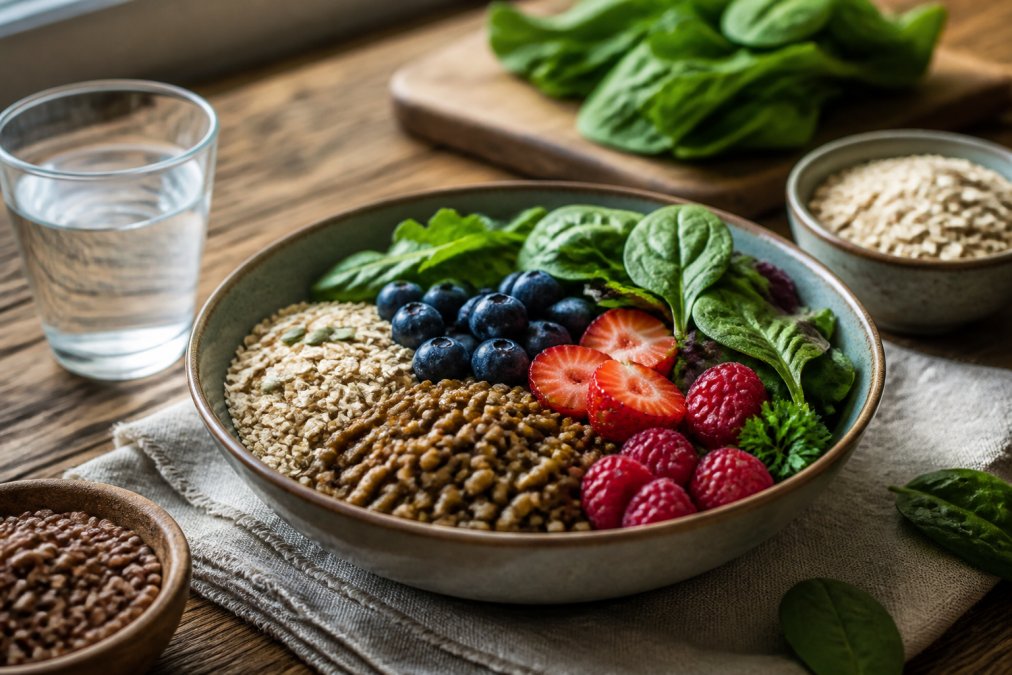
A 40g serving of oats delivers roughly 4g of fibre. A tin of chickpeas adds around 12g. A single pear with the skin on gives you about 5g. Stack three or four of these across the day and you are most of the way to your target without thinking about it.
Soluble vs Insoluble Fibre: What Your Gut Needs
Soluble fibre dissolves in water and forms a gel that slows digestion, which helps with blood sugar and cholesterol. Insoluble fibre does not dissolve; it adds bulk to stool and helps move things through the bowel.
You need both. Oats, barley, and pulses lean soluble. Wholegrain bread, nuts, and the skins of fruit and vegetables lean insoluble. A common mistake is loading up on one type and wondering why digestion still feels off.
Easy Ways to Add More Fibre to Your Meals
- Stir a spoonful of oats into yoghurt at breakfast
- Swap white rice for brown rice twice a week
- Add a handful of chickpeas to salads and soups
- Snack on a pear or apple with the skin on
- Leave the skins on potatoes and carrots
Increase fibre gradually over two to three weeks. Jumping straight from 15g to 35g in a day is the fastest route to bloating and cramping.
The Benefits of Fermented Foods for Gut Health
The benefits of fermented foods for gut health come from the live cultures they carry. Fermentation produces beneficial bacteria that can support the balance of your gut microbiome, and unlike fibre, these foods deliver microbes directly rather than feeding the ones already there.
Kefir, live yoghurt, kimchi, sauerkraut, miso, and tempeh are the ones worth knowing. They are widely available in UK supermarkets and health food shops, and they fit easily into breakfast, lunch, or as a side.
Yoghurt, Kefir and Kimchi: What to Look For
For yoghurt, choose one labelled "live" or "bio" with no added sugar. Kefir is a fermented milk drink with a broader mix of cultures than most yoghurts. Kimchi and sauerkraut should be unpasteurised and kept refrigerated.
Start with a small serving. A tablespoon of kimchi or a small glass of kefir is plenty for the first week. Some people find large amounts of fermented food cause temporary bloating while the gut adjusts.
Prebiotic vs Probiotic Foods: What's the Difference?
Prebiotic vs probiotic foods is the distinction that trips up most people. Probiotics are live bacteria found in fermented foods. Prebiotics are the fibres that feed those bacteria, found in garlic, onions, leeks, asparagus, bananas, and oats.
You need both, and they work best together. Probiotics add to your gut population; prebiotics give that population something to eat. A diet rich in one but poor in the other is like stocking a kitchen with no food in it.
| Type | What It Is | Food Sources | Role |
|---|---|---|---|
| Probiotic | Live beneficial bacteria | Kefir, live yoghurt, kimchi, sauerkraut | Adds microbes to the gut |
| Prebiotic | Fibre that feeds bacteria | Garlic, onions, leeks, oats, bananas | Feeds existing microbes |
| Soluble fibre | Gel-forming fibre | Oats, barley, pulses | Slows digestion, supports regularity |
| Insoluble fibre | Bulking fibre | Wholegrains, nuts, fruit skins | Adds bulk, aids movement |
A practical approach is to pair them. Yoghurt with a sliced banana. Kefir with oats. Kimchi alongside a lentil salad. Each pairing hits both sides of the equation in one meal.
How to Improve Gut Health Naturally: A Practical Daily Routine
Learning how to improve gut health naturally comes down to consistency rather than any single food. A daily routine that combines fibre, fermented foods, water, and movement will outperform any short-term cleanse or supplement spike.
Here is a routine that works for most people:
- Morning: Oats or wholegrain toast, plus a live yoghurt or kefir
- Midday: A salad or soup with pulses, leafy greens, and a fermented side
- Afternoon: A piece of fruit with the skin on, or a handful of nuts
- Evening: A wholegrain base, two vegetables, and a prebiotic like onion or garlic
- All day: Water. Fibre needs fluid to do its job; without it, you get the opposite of what you want
Add one change at a time and give it a fortnight before layering in the next. Your gut bacteria respond to sustained shifts, not overnight ones.
When Diet Alone Isn't Enough: Targeted Gut Support
Diet is the first lever, but it is not always sufficient. Antibiotics, travel, stress, and age all disrupt the gut microbiome, and rebuilding it through food alone can take weeks. This is where targeted support earns its place.
At Supplements Sanctuary, we manufacture food supplements in the UK in ISO 9001 and ISO 22000 certified facilities, with batch traceability for every raw material. For gut support specifically, the most relevant product is pb-sin 18 Probiotic & Prebiotic Complex, a daily formula combining 10 billion CFU of live cultures across seven bacterial strains with fructooligosaccharides, a prebiotic fibre that feeds them. It is a once-daily vegan capsule, £29.99 for a 60-capsule supply.

For those whose digestion sits alongside broader metabolic goals, Veluna Daily GLP Nutrients includes inulin from Jerusalem artichoke alongside zinc and chromium, both of which contribute to normal macronutrient metabolism. It is £27.99 for 60 capsules.

A supplement is not a replacement for a varied diet. It is a bridge for the weeks when food alone is not keeping pace. Guidance from the NHS on probiotics and gut health is worth reading before you start, and the British Nutrition Foundation on fibre has practical advice on hitting your daily target.
Rebuilding gut health takes weeks, not days, and the hardest part is staying consistent when results feel slow. Supplements Sanctuary makes that easier with UK-manufactured capsules, full batch traceability, and clear labelling, so you know exactly what you are taking. Explore the pb-sin 18 Probiotic & Prebiotic Complex or browse the full range to find the right support for your routine. Continue shopping with Supplements Sanctuary and give your gut the consistency it needs.
Frequently Asked Questions
What are the best foods to eat for a healthy gut?
The best food for gut health and digestion includes fibre-rich options like oats, lentils, berries, and leafy greens, alongside fermented foods such as yoghurt, kefir, and kimchi. These foods feed beneficial bacteria and support regular digestion. Aim for variety rather than focusing on one item, and introduce new fibre sources gradually to avoid bloating. Pairing prebiotic foods with probiotic foods gives your gut both the fuel and the live cultures it needs.
How can I improve my gut health naturally?
You can improve gut health naturally by eating a varied diet rich in fibre and fermented foods, drinking enough water, and eating at consistent times. Chewing food thoroughly and managing stress also support digestion. Many people notice changes within two to four weeks of consistent dietary adjustments, though individual results vary. If you have persistent symptoms, speak to a healthcare professional before making significant changes.
Are fermented foods the best for gut health?
Fermented foods offer clear benefits for gut health because they contain live cultures that support a balanced gut microbiome. However, they work best alongside fibre-rich foods rather than replacing them. The benefits of fermented foods for gut health include improved digestion and a more diverse gut bacteria population. Include them as part of a varied diet rather than relying on them alone.
What is the difference between prebiotic and probiotic foods?
Prebiotic foods, such as garlic, onions, and bananas, contain fibres that feed the beneficial bacteria already in your gut. Probiotic foods, like yoghurt and kefir, contain live bacteria that add to your gut population. Understanding prebiotic vs probiotic foods helps you combine both for better results. A diet that includes both types supports a more resilient and diverse gut environment than either alone.
How long does it take to improve gut health through diet?
Many people notice improvements in digestion within two to four weeks of consistently eating more fibre and fermented foods. The gut microbiome responds gradually, so lasting changes may take several months. Staying consistent matters more than making drastic changes. If you are considering a supplement alongside dietary changes, look for products with clear labelling and batch traceability, such as those from Supplements Sanctuary.