

How to Boost Iron Levels Quickly Through Food
Quick Summary
Food alone rarely raises iron levels quickly, because dietary iron builds stores over weeks and months rather than days. Eating an iron-rich food at every main meal, with vitamin C at the same meal, improves absorption. A GP blood test should guide treatment if deficiency is suspected.
- Eat one clear iron-rich food at breakfast, lunch and dinner.
- Add vitamin C to the same meal to help your body absorb iron.
- Drink tea and coffee at least an hour away from iron-rich meals.
- Track what you eat for two to three weeks to spot gaps.
- A diagnosed deficiency may need GP-recommended iron tablets alongside diet.
Table of Contents
- What 'Quickly' Really Means When You Raise Iron Levels
- How to Increase Iron Levels Quickly with Food
- Top Iron-Rich Foods for Vegetarians
- How Vitamin C Helps Iron Absorption
- Foods and Drinks That Reduce Iron Absorption
- A Practical One-Day British Meal Plan for Iron
- When to See a GP and Whether Supplements Are Safe
- Booking Your Next Step: Getting Your Iron Checked
- Frequently Asked Questions
What 'Quickly' Really Means When You Raise Iron Levels
Last Updated: November 16, 2026
If you're asking how to boost iron levels quickly through food, the honest answer is that food alone rarely works fast. Dietary changes build iron stores over weeks and months, not days. The timeline depends on how low levels started, why they dropped, and what you eat each day. If you want a realistic sense of how long iron supplements take to work, read how long iron supplements take to work.
Iron that you eat has to be absorbed by your gut before your body can use it. Your body absorbs only a portion of the iron in a meal, and that portion changes with what you eat alongside it. So the speed of your results depends on both how much iron you take in and how well you absorb it.
For a diagnosed deficiency, a GP may recommend iron tablets or, in some cases, intravenous iron alongside dietary changes. Diet still matters, but it works best as support, not as the fastest route to correcting low iron.
Skipping a proper blood test and assuming diet alone will fix tiredness can delay treatment for a condition that needs medical attention.
How to Increase Iron Levels Quickly with Food
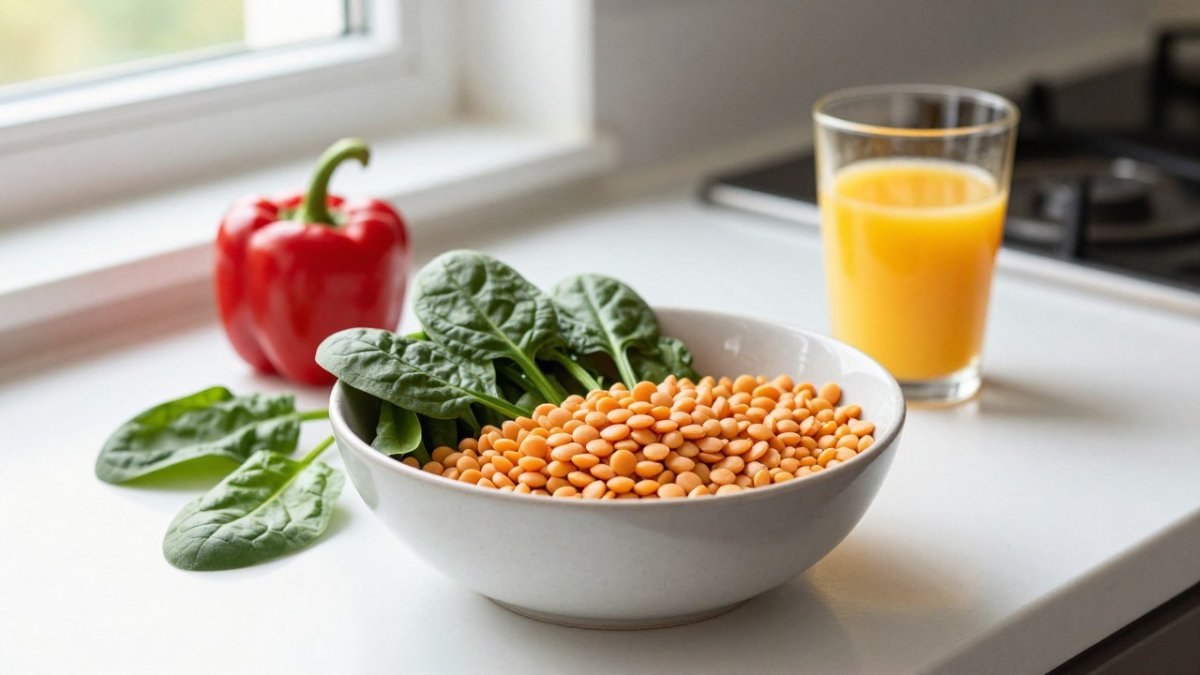
Eating more iron-rich foods is the first step, and pairing them well makes a real difference. Work through these steps each day:
-
Eat an iron-rich food at every main meal. Aim for one clear source at breakfast, lunch and dinner.
-
Add vitamin C to that meal. Peppers, citrus fruit, tomatoes and broccoli all help your body absorb iron.
-
Space out tea and coffee. Drink them at least an hour away from iron-rich meals.
-
Keep track for two to three weeks. Note what you eat so you can see patterns and spot gaps.
These steps help most when you keep them up consistently. Results are gradual, so give your changes time before judging them.
The steps below set out how to build iron intake through meals, with the timing that helps absorption.
| Step | What to do | Time or frequency |
|---|---|---|
| Iron-rich food | Eat one clear source at each main meal | Breakfast, lunch and dinner |
| Vitamin C | Add it to the same meal as the iron source | At every iron-rich meal |
| Tea and coffee | Drink them away from iron-rich meals | At least an hour apart |
| Tracking | Note what you eat to spot gaps | Two to three weeks |
Top Iron-Rich Foods for Vegetarians
Vegetarians can get plenty of iron, but the iron in plant foods is non-haem iron, which the body absorbs less easily than the haem iron in meat. That means vegetarians benefit most from combining several sources with vitamin C.
Good plant sources include:
- Lentils and chickpeas: a cup of cooked lentils gives a solid dose of iron
- Tofu: calcium-set tofu is a reliable choice
- Fortified breakfast cereals: check the label for iron content
- Pumpkin and sesame seeds: easy to add to salads, porridge or yoghurt
- Spinach and leafy greens: rich in iron, but they also contain compounds that limit absorption, so pair them with vitamin C
- Quinoa and wholegrains: useful for everyday meals
- Dried apricots and raisins: handy snacks that add iron
A common mistake is relying on spinach alone. Its iron is hard to absorb, so combine it with lemon juice or peppers to get more benefit.
How Vitamin C Helps Iron Absorption
Vitamin C is one of the most useful tools for improving iron absorption. It converts non-haem iron into a form your gut absorbs more easily. Adding vitamin C to a meal can noticeably increase how much iron your body takes in.
Simple ways to add it:
- Squeeze lemon over lentils or spinach
- Add peppers to bean dishes
- Eat tomatoes in chilli or pasta sauce
- Have a small glass of orange juice with fortified cereal
The timing matters too. Eat your vitamin C source at the same meal as your iron source, not hours apart.
Foods and Drinks That Reduce Iron Absorption
Some foods and drinks block iron absorption, so it helps to know which ones to limit around your iron-rich meals.
Watch these closely:
- Tea and coffee: the tannins and polyphenols they contain can cut absorption sharply
- Dairy products: calcium competes with iron, so avoid milk or cheese in the same meal
- Wholegrain bran and high-fibre foods: phytates in bran can reduce absorption
- Red wine: polyphenols can interfere with absorption
- Antacids: these can lower stomach acid, which helps iron dissolve
A practical fix is to keep tea, coffee and dairy at least an hour away from your main iron meals. You don't need to cut them out completely.
A Practical One-Day British Meal Plan for Iron
This plan uses familiar British foods and shows realistic portions. It is a template, not a prescription, adjust amounts to your appetite, and check labels because iron content varies by brand. The aim is to show how iron sources, vitamin C and absorption blockers fit into a normal day.
Breakfast (7-8am)
- 40-50g fortified breakfast cereal (check the label for iron content) with 200ml semi-skimmed milk
- A small glass (150ml) of orange juice, or a handful of strawberries
- A handful (about 25g) of raisins
This meal pairs fortified cereal (non-haem iron) with vitamin C from juice or fruit. Keep tea and coffee for later, tannins in a morning brew can cut absorption from the cereal.
Mid-morning (10-11am)
- A small handful (about 25g) of pumpkin seeds or a cereal bar that lists iron on the label
- Water or a herbal tea
Lunch (12.30-1.30pm)
- A bowl (about 300g) of lentil and vegetable soup made with 60-80g dry red lentils per portion
- One slice of wholemeal bread
- A side of sliced red pepper (half a pepper) or a small tomato salad
Lentils are one of the strongest plant sources. The pepper adds vitamin C at the same meal. If you eat meat, a chicken or ham sandwich on wholemeal bread works too, but keep the pepper or tomato alongside it.
Afternoon (3-4pm)
- A tangerine or a small handful of dried apricots (about 30g)
- Water
Dinner (6-7pm)
- Tofu stir-fry: 100-150g firm tofu, a generous portion of broccoli (about 80g), half a red pepper and 60-75g dry wholegrain rice
- A squeeze of lime or lemon over the top
Tofu is calcium-set in most UK brands, which is fine, the calcium is in the tofu itself, not a separate dairy drink at the same meal. The broccoli and pepper add vitamin C.
Evening (8-9pm)
- Herbal tea or water
- If you want a snack, a small bowl of fortified cereal with a little fruit, or a handful of sesame seeds on yoghurt, but keep this away from tea or coffee.
How the day adds up The total iron intake from this plan depends on brands and portion sizes. Absorption varies widely from person to person. Because cookware can also shape how iron-rich meals are prepared, The Low Tox Project offers another angle to consider alongside portion sizes and absorption.
Vegetarian and vegan swaps
- Replace the milk with fortified plant milk (check it lists iron or is fortified with calcium and B12)
- Use fortified cereal and fortified bread where available
- Add a tablespoon of blackstrap molasses to porridge, it is a concentrated iron source, though the taste is strong
- Include a portion of beans, chickpeas or lentils at two meals rather than one
Watch out: if you rely on spinach as your main iron source, you may absorb less than you expect, spinach contains oxalates that bind iron, so pair it with vitamin C and include other sources such as lentils, fortified cereal or tofu across the week.
When to See a GP and Whether Supplements Are Safe
Food changes support iron intake, but they are not a treatment for a diagnosed deficiency. If you suspect low iron, the right next step is a blood test, not a longer shopping list.
Symptoms that warrant a GP appointment See a GP if you have ongoing tiredness that is not explained by sleep or stress, breathlessness on mild exertion, pale skin or pale inner eyelids, headaches, dizziness, restless legs, brittle nails, or a sore tongue.
What the blood tests show A GP will usually arrange a full blood count, which includes haemoglobin, the oxygen-carrying protein in red blood cells. Ferritin is the key test for iron stores; a low ferritin suggests depleted iron even before anaemia develops (the WHO).
Why food alone may not be enough Dietary iron is absorbed in small amounts, and a diagnosed deficiency may need more than diet can supply in the short term. A GP may recommend iron tablets, and in some cases intravenous iron for severe or poorly absorbed deficiency.
Safe use of iron supplements Only take iron supplements if a GP or pharmacist has advised them, and follow the dose and duration exactly. If you are choosing a product, compare safe UK supplement brands with transparent labels. If you are buying online, learn how to avoid fake supplements before you order.
If a GP prescribes iron, ask how long to take it and when to have a follow-up blood test. Many people need several weeks before haemoglobin improves, and ferritin can take longer to recover.
Who should be especially careful Pregnant women, people with chronic liver disease, people with haemochromatosis or a family history of it, and anyone taking multiple medicines should not start iron supplements without medical advice. Children should only take iron supplements under medical guidance.
This article is general information, not medical advice. It cannot diagnose iron deficiency or tell you which treatment suits you. Speak to a GP or pharmacist before changing your diet or starting supplements, especially if you are pregnant, have a health condition, or take other medicines.
Booking Your Next Step: Getting Your Iron Checked
If you're unsure where your iron stands, a blood test is the most reliable way to find out. Once you know your results, you can decide with your GP whether food changes, supplements or both make sense. Supplements Sanctuary offers UK-manufactured food supplement capsules with batch traceability and clear labelling, so you can review products carefully before you choose.
Frequently Asked Questions
Can you raise iron levels overnight?
No. Food changes take weeks to show up in blood tests, because iron stores such as ferritin rebuild slowly. Eating iron-rich foods with vitamin C at each meal can improve absorption within days, but a measurable rise in iron levels usually takes several weeks to months. If you feel very tired, breathless or dizzy, do not wait for diet to work. Speak to your GP, who can check your levels and advise on faster treatment if you need it.
What snack is highest in iron?
Pumpkin seeds are one of the most practical iron-rich snacks, providing a useful amount of non-haem iron in a small handful. Dried apricots and raisins also contain iron, though they are better paired with a source of vitamin C such as a satsuma. Roasted chickpeas are another option for vegetarians. Choose unsalted versions where possible and combine with fruit to help the iron you eat get absorbed.
When should I speak to a GP about low iron levels?
See your GP if you have persistent tiredness, pale skin, shortness of breath during normal activity, heart palpitations, unusually heavy periods, or cravings for ice or non-food items. Your GP can order a full blood count and ferritin test to confirm whether you have iron deficiency and to look for causes such as blood loss. Do not start high-dose iron tablets without testing first, as too much iron can be harmful.
Is it safe to take iron supplements without a diagnosis?
It is not advisable to take iron supplements without testing first. Iron builds up in the body, and excess can cause constipation, stomach upset and, over time, organ damage in people who do not need it. Supplements are usually recommended after a blood test confirms low iron. If you do take them on advice, keep them out of reach of children, as iron overdose in young children is dangerous, and take them away from tea, coffee and dairy.
