

5 Safe UK Supplement Brands with Transparent Labels
Table of Contents
- What Makes a UK Supplement Brand Safe and Transparent?
- The Benefits of UK-Manufactured Supplements
- How to Read Supplement Labels for Purity
- Third-Party Testing for UK Vitamins: What to Look For
- 1. Supplements Sanctuary: Full Traceability and ISO-Certified UK Manufacturing
- 2. Vitabiotics: Long-Standing UK Brand with Broad Product Ranges
- 3. Wild Nutrition: Food-Grown Supplements with Transparent Sourcing
- 4. Terranova: Plant-Based Formulas with Clear Ingredient Lists
- Choosing Between These Safe UK Supplement Brands
- Frequently Asked Questions
Last Updated: 15 September 2026
What Makes a UK Supplement Brand Safe and Transparent?
One of the safe UK supplement brands is one that manufactures under ISO-certified quality systems, labels every ingredient with its exact amount and NRV percentage, and can trace each batch of raw material back to its supplier. Transparency means the brand shows you that information rather than simply claiming it. At Supplements Sanctuary, we have manufactured food supplement capsules in the UK since 2014, and we built our labelling and traceability standards around one question: could a customer verify what we say? That question is the difference between a safe UK supplement brand and a well-designed logo.
Here is what most guides get wrong. They treat "UK-manufactured" as a safety guarantee in itself. It is not. Manufacturing in Britain sets a regulatory floor, not a ceiling, and plenty of brands clear that floor with room to spare while others barely touch it. The brands worth your money are the ones that go further: batch traceability, published specifications, and labels you can actually decode.
Below, we break down how to read a supplement label, what third-party testing should look like, and five brands that meet a genuinely high bar. Supplements Sanctuary is our first pick, and we will show you exactly why.
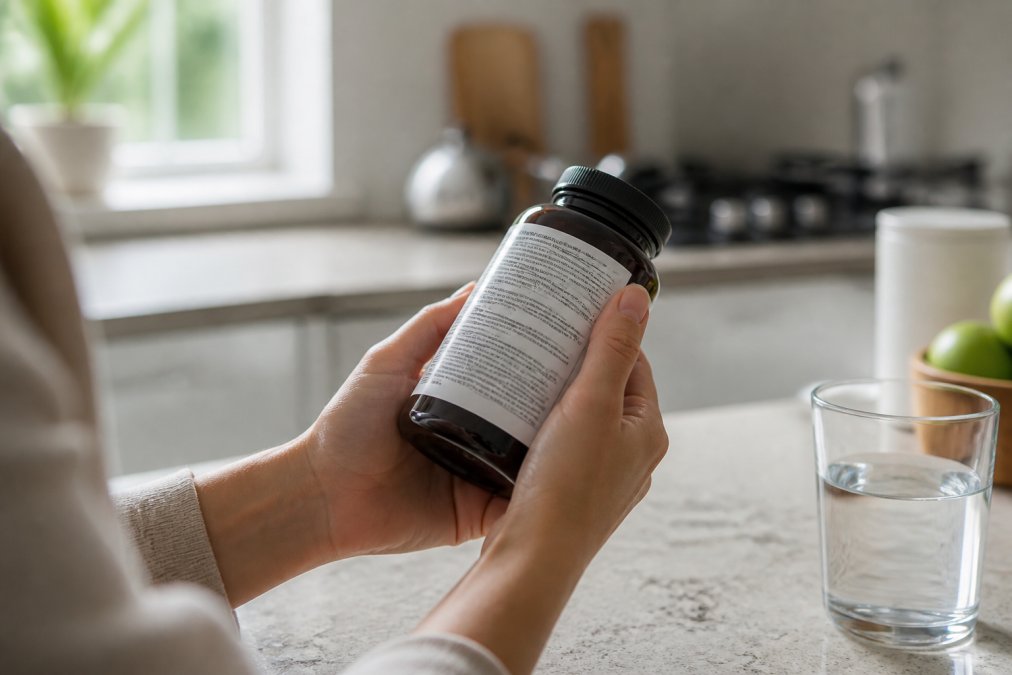
The Benefits of UK-Manufactured Supplements
UK-manufactured supplements offer three practical advantages: they fall under UK and EU food supplement regulations rather than an overseas regime, they are subject to recognised food safety standards such as ISO 22000, and they are easier to hold accountable if something goes wrong. The [Food Standards Agency guidance on food supplements(/blogs/news/benefits-of-uk-manufactured-food-supplements) | food.gov.uk] sets out the rules UK manufacturers must follow on composition, labelling and claims.
The regulatory point matters more than people realise. A supplement made outside the UK and imported here still has to meet UK labelling rules, but the manufacturing conditions are harder for a UK regulator to inspect directly. When a brand manufactures domestically in an ISO 9001 and ISO 22000 certified facility, the quality system is audited, documented and open to scrutiny.
There is also a practical benefit for anyone managing a daily routine. UK-made capsules tend to use consistent capsule shells and standardised extracts, which means the product you buy in March behaves like the product you bought in January. For older adults managing bone or cardiovascular health, or athletes timing recovery around training, that consistency is not a nice-to-have. It is the whole point.
How to Read Supplement Labels for Purity
Reading a supplement label for purity comes down to four things: the ingredient list, the amount per serving, the NRV percentage, and the allergen or warning statements. If a label is missing any of these, treat it as a red flag. The NHS advice on vitamins and minerals is a useful starting point for understanding what each nutrient does and how much you need.
Most people scan the front of the bottle and stop there. The front is marketing. The back is where the truth lives.
Ingredient Lists and What They Reveal
An ingredient list reveals whether a brand is being specific or vague. "Green tea extract" tells you almost nothing. "Green tea extract (Camellia sinensis) 154 mg, standardised for EGCG" tells you the species, the amount and the active compound. Look for the Latin botanical name in brackets, the milligram amount, and the word "standardised" where it applies.
A common mistake is assuming a longer ingredient list means a better product. It usually means the opposite: long lists often hide tiny amounts of many ingredients behind a proprietary blend, so you cannot tell how much of anything you are getting. A transparent label lists each ingredient separately with its own figure.
NRV Percentages and Serving Sizes
NRV stands for Nutrient Reference Value. It is the daily amount of a vitamin or mineral that regulators consider adequate for most adults, and it appears on labels as a percentage. A capsule providing 10 mg of zinc at 100% NRV means one capsule covers your full daily reference intake of that nutrient (Dietary reference values).
Serving size is where labels get quietly misleading. A bottle labelled "60 capsules" might be a 60-day supply at one capsule daily, or a 30-day supply at two. Always check the serving size line before comparing price per bottle across brands. Two products at the same price can differ by a factor of two in cost per day.
| Label Element | What It Tells You | Red Flag |
|---|---|---|
| Ingredient name | Species and form used | Vague names, no botanical name |
| Amount per serving | Actual dose in mg or µg | "Proprietary blend" with no breakdown |
| NRV % | Share of daily reference intake | Missing entirely |
| Serving size | Capsules per day | Not stated on front or back |
| Warnings | Who should not take it | Absent on caffeine or botanical products |
Third-Party Testing for UK Vitamins: What to Look For
Third-party testing for UK vitamins means an independent laboratory, not the manufacturer, verifies that the product contains what the label claims and is free from contaminants above safe thresholds. Ask any brand three questions: who tests, what they test for, and whether results are available on request.
What most guides miss is that "third-party tested" is not a regulated phrase. Any brand can print it. The meaningful version names the laboratory, specifies the tests (heavy metals, microbial contamination, identity confirmation, potency), and states the frequency, typically per batch rather than annually.
Traceability is the piece that ties testing to trust. When a manufacturer records which raw material lot went into which production batch, a test result stops being a marketing claim and becomes a document you can request. That is how you verify a safety threshold rather than taking someone's word for it.
1. Supplements Sanctuary: Full Traceability and ISO-Certified UK Manufacturing
Supplements Sanctuary is our top pick because it combines the three things that actually matter: UK manufacturing in an ISO 9001 and ISO 22000 certified facility, batch traceability for every raw material, and labelling that states exact amounts and NRV percentages rather than hiding behind blends. Established in 2014 and rated 4.75 out of 5 by customers, it operates as a Responsible Food Business Operator under UK and EU food supplement regulations.
The traceability claim is the one worth testing, because most brands make it loosely. Ours is batch-level: every raw material lot is recorded against the production batch it went into, so a specific bottle can be traced back through manufacturing. If you want to know where your capsules came from, that record exists.
What you get instead is depth in metabolic and daily wellness formulas, all made to the same standard.
Key Product Categories and Standout Formulas
The metabolic support range is where the brand's formulation approach shows most clearly. Each product targets a specific nutrient claim rather than stacking ingredients for show.
2. Vitabiotics: Long-Standing UK Brand with Broad Product Ranges
3. Wild Nutrition: Food-Grown Supplements with Transparent Sourcing
4. Terranova: Plant-Based Formulas with Clear Ingredient Lists
Choosing Between These Safe UK Supplement Brands
Frequently Asked Questions
How can I tell if a UK supplement brand is safe?
Check for a UK or EU address on the label, which shows a responsible food business operator. Look for ISO 9001 or ISO 22000 certification at the manufacturing site. Verify that the brand publishes batch traceability information and third-party test results. Safe UK supplement brands also comply with UK food supplement regulations, including authorised health claims and clear allergen labelling. If a brand cannot show you where its ingredients come from or refuses to share test certificates, treat that as a red flag.
What does 'transparent labelling' mean for supplements?
Transparent labelling means the brand lists every active ingredient with its exact amount per serving, uses standardised extracts where relevant, and states the form of each nutrient (for example, chromium picolinate rather than just 'chromium'). It also means no proprietary blends that hide individual doses, clear NRV percentages, and a full allergen and excipient list. Brands like Supplements Sanctuary go further by providing batch traceability so you can see where raw materials came from.
Are UK-manufactured supplements safer than imported ones?
UK-manufactured supplements must meet UK food safety and labelling regulations, which include strict limits on contaminants and authorised health claims. Imported products may follow different standards, and customs checks do not guarantee full compliance with UK rules. That said, safety depends on the specific brand's testing and quality control, not just the country of origin. A UK-made supplement from an ISO-certified facility with batch traceability gives you a clearer paper trail if something goes wrong.
Why is third-party testing important for vitamins?
Third-party testing for UK vitamins verifies that what is on the label matches what is in the capsule. It checks for heavy metals like lead and cadmium, confirms potency, and screens for contaminants. Brands that publish certificates of analysis from independent labs give you verifiable proof rather than marketing claims. Without third-party testing, you rely entirely on the manufacturer's own word, which is harder to check if you have concerns about purity or dosage accuracy.
What should I look for on a supplement label in the UK?
Look for the words 'food supplement' and a UK or EU responsible person address. Check that each active ingredient has a specific amount and NRV percentage. Avoid products with vague proprietary blends. Look for allergen statements, storage instructions, and a best-before date. If you are comparing brands, prioritise those that list the exact chemical form of each nutrient and provide batch numbers you can trace. Supplements Sanctuary, for example, lists every ingredient with its form and amount per capsule.