

Botanical Blends for Athletic Performance: What the Evidence Shows
Quick Summary
Botanical blends are combined plant extracts, often paired with amino acids, that athletes take to support endurance, recovery and training tolerance. Research on individual herbs is still limited, and many performance claims outpace the evidence, so treat blend benefits as promising but unproven.
- Check the milligrams per capsule, since a herb listed at a tiny dose may have no meaningful effect.
- Blends make it hard to attribute any effect to a single ingredient.
- Ginseng, rhodiola and ashwagandha have the most human research among herbs used in sport.
- Adaptogens may ease perceived fatigue, but a measurable performance benefit is not established.
- Use third-party batch testing and check your governing body's prohibited list, since contamination can cause a positive test.
Table of Contents
- What Botanical Blends Are and Why Athletes Use Them
- The Best Herbs for Athletes: A Named Overview
- How Botanical Blends May Support Endurance and Stamina
- Adaptogenic Herbs: Stress Response, Fatigue and Focus
- Herbal Supplements for Athletes: Benefits and Risks Side by Side
- Blends Versus Single Ingredients, Dosing and Anti-Doping Checks
- Choosing a Blend You Can Verify and Trial Safely
- Frequently Asked Questions
What Botanical Blends Are and Why Athletes Use Them
Last Updated: November 18, 2026
Botanical blends for athletic performance are combined plant extracts, often paired with amino acids, that athletes take to support endurance, recovery and training tolerance. Research on individual herbs is still limited, and many claims outpace the evidence.
A 2025 review in Frontiers in Nutrition discussed plant-based supplements in relation to exercise performance and recovery, including potential effects on muscle damage and energy availability, but it did not report quantitative outcomes Plant-based supplements in enhancing exercise performance, Frontiers in Nutrition. Because the review identifies energy availability as one possible factor in performance, its findings also underline the value of choosing natural energy supplements with attention to the evidence behind their ingredients.
A blend differs from a single-ingredient product because it combines several botanicals, usually at fixed extract ratios, in one capsule. That makes it convenient, but it also makes it harder to attribute any effect to a specific ingredient.
Watch out: a blend's label can list a herb with an impressive name at a tiny dose. Check the milligrams per capsule before assuming a meaningful amount is present.
The Best Herbs for Athletes: A Named Overview
Not all botanicals have the same level of support. The sections below separate herbs with more human research from those supported mainly by animal or laboratory work.
Herbs with the most human research
Ginseng, rhodiola and ashwagandha appear most often in sports-focused reviews. A 2018 review in Sports Medicine - Open discussed Rhodiola rosea, Ginkgo biloba, Tribulus terrestris and Cordyceps sinensis, reporting claimed benefits for muscle growth and other outcomes, though without quantitative results Herbal medicine for sports: a review, Sports Medicine - Open.
Herbs with weaker or mostly animal evidence
Tribulus terrestris is a common ingredient in performance blends, yet the human evidence for muscle or performance gains is inconsistent. Treat claims about it as unproven until larger, well-controlled human trials confirm them.
How Botanical Blends May Support Endurance and Stamina
Endurance is the performance area where botanical blends are most often promoted, yet the evidence is uneven and often overstated.
A 2025 review in the Journal of Herbal Medicine discussed medicinal plants in athletes' diets and their possible link to performance, but it provided no quantitative findings for endurance outcomes The importance of medicinal herbs and plants for sports, Journal of Herbal Medicine. If you want to compare botanical blends against a better-studied option, see whether creatine monohydrate is worth it for endurance athletes. That pattern is common: reviews list candidate botanicals and proposed mechanisms without reporting effect sizes for time-to-exhaustion, time-trial performance or repeat-sprint ability.
When judging an endurance claim, look for measurable endpoints rather than label language. The most useful outcomes are time to exhaustion, time-trial completion time, repeat-sprint decrement, perceived exertion at a fixed workload and physiological markers such as heart rate drift or lactate threshold.
However, human trials of these amino acids for endurance performance have produced mixed results, and the doses used in research often differ from those in proprietary blends. The same caution applies to beetroot-derived nitrates, which have more consistent support in the literature but are not botanicals in the herbal sense.
A common pattern in blend research is that studies use a fixed combination and cannot attribute any effect to a single ingredient. This makes it difficult to know whether the blend works because of one herb, a synergistic interaction or a placebo effect. For that reason, treat endurance claims for blends as promising but unproven until blend-specific trials report measurable performance outcomes.
Watch out: a blend may list an endurance herb at a dose far below the range used in published studies, so check the milligrams per capsule against the research before assuming a meaningful amount is present.
Adaptogenic Herbs: Stress Response, Fatigue and Focus
Adaptogens are botanicals proposed to help the body adapt to physical and mental stress. A 2023 review by M. Amir and colleagues describes adaptogens as used to improve attention and endurance in fatigue-related situations, though it reports no numerical data Adaptogenic herbs: A natural way to improve athletic performance.
A 2022 article in Nutrients by J. F. Garcia and colleagues examined herbs used by physically active people for alertness and metabolic purposes, but it gave no sample size or measured performance outcome Herbs as an Active Ingredient in Sport, Nutrients.
The practical takeaway: adaptogens may help with perceived fatigue and focus, but the measurable performance benefit is not established.
Herbal Supplements for Athletes: Benefits and Risks Side by Side
| Aspect | Potential benefit | Potential risk or limitation |
|---|---|---|
| Endurance | May support perceived stamina | Effect size rarely quantified |
| Recovery | Proposed effects on muscle damage | Few controlled human trials |
| Focus and fatigue | Adaptogens may ease perceived fatigue | Inconsistent results across studies |
| Safety | Familiar ingredients in many blends | Interactions with medicines possible |
| Anti-doping | Some products are batch-tested | Contamination can cause positive tests |
Evidence for herbal supplements in sport does not establish that every botanical is safe or effective. Some evidence suggests certain botanicals may have beneficial effects, but this does not apply to all cases Dietary Supplements and Botanicals in Sports: Evidence, Regulation, and Practical Considerations.
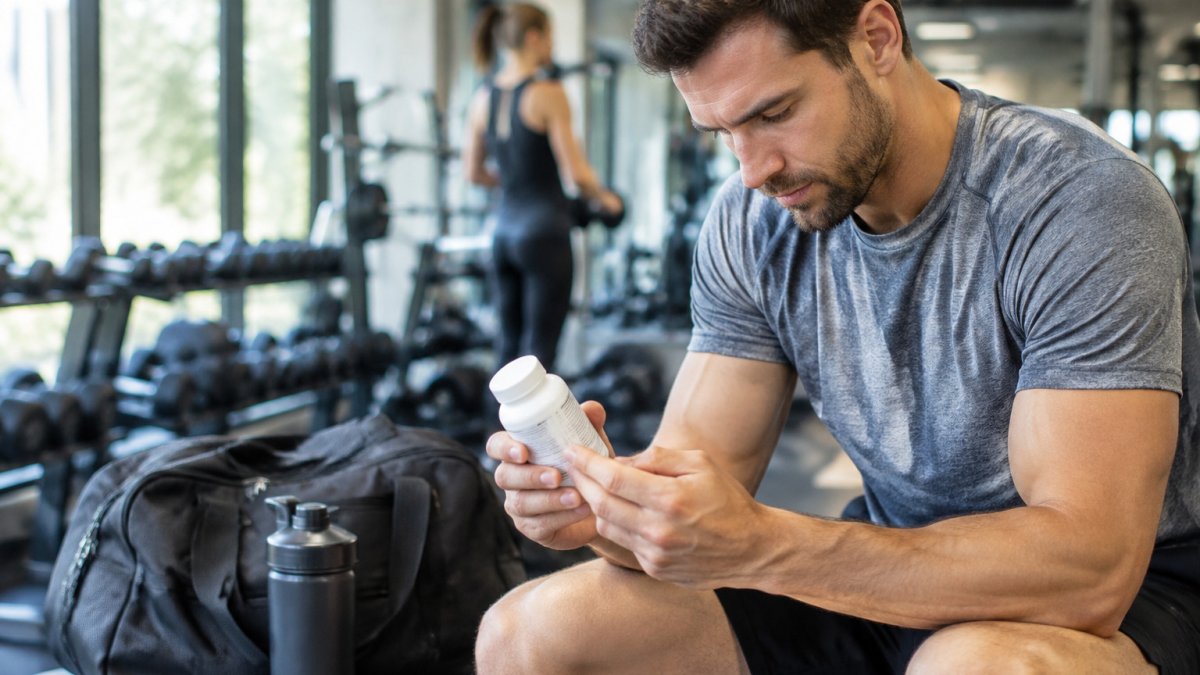
Herbal products also carry risks as well as perceived benefits. Athletes use them for recovery, inflammation, pain and alertness, and the risks deserve equal weight Herbal Supplements For Athletes: Benefits And Risks, GSSI Sports Science Exchange.
Blends Versus Single Ingredients, Dosing and Anti-Doping Checks
A single-ingredient product lets you test one variable at a time. A blend hides which ingredient, if any, is doing the work. For most athletes, a blend makes sense only if each ingredient is present at a documented dose and the combination has been studied as a whole.
The case for blends rests on the idea of synergy: that two or more botanicals may interact to produce effects greater than the sum of their parts. In practice, synergy is difficult to prove. Most blend studies compare the combination against placebo rather than against each individual ingredient, so they cannot show whether the combination outperforms the components. A common pattern is that a blend performs no better than its most active ingredient, while adding cost and complexity. Until blend-specific trials with appropriate comparators are published, treat synergy claims as hypotheses rather than established facts.
Dose, timing and duration matter, and the research base is patchy. For many botanicals, studies do not report the dose used, and few run long enough to show whether benefits persist beyond a few weeks. For example, ashwagandha research commonly uses standardised root extracts in the range of several hundred milligrams per day, while rhodiola studies often use standardised extracts in similar ranges. These are not universal recommendations, and product labels vary widely.
If you compete in a tested sport, anti-doping checks are essential. Plant extracts can contain undeclared substances, and a contaminated product can produce a positive test. The practical steps are to check your governing body's prohibited list, look for third-party batch testing from recognised programmes, and keep a record of any product you use. Some products are batch-tested, but testing reduces rather than eliminates risk. A "natural" label does not guarantee a product is free of banned substances.
Watch out: a blend may list a herb with an impressive name at a tiny dose, and without batch testing you cannot know whether the product contains what the label claims or whether it is contaminated with a prohibited substance.
Choosing a Blend You Can Verify and Trial Safely
Start by reading the label. Our guide on how to read supplement ingredient labels in the UK explains what to look for, including dosage, extract ratios and sourcing details. Once you have chosen a product, a daily supplement routine for athletes shows how to fit it into training and recovery. Then check how the product is tested, using our guide on how to check supplement ingredient purity.
Our current range includes Alpha Drive Performance Support Capsules, which combine Tribulus Terrestris, L-Arginine, Maca, Panax Ginseng, Fenugreek and Rhodiola Rosea, with listed amounts per capsule. Its label advises one capsule daily, with a second capsule only if required, and no more than two in any 24-hour period. Keskara Performance Support is a daily formula with amino acids and botanicals, and Cardio Genix combines adaptogenic extracts including Ashwagandha KSM-66 and Rhodiola in one daily capsule. Cardio Genix is positioned for glycogen balance support rather than athletic performance.
Best for: athletes who want a daily botanical blend with listed ingredient amounts. Skip if: you are pregnant, breastfeeding, taking medication or have a medical condition, and have not spoken to a healthcare professional first.
Consult your healthcare professional before use if you take medication or have a medical condition, and discontinue use if you experience an adverse reaction. Supplements should complement a varied diet, not replace one.
Frequently Asked Questions
What is the best supplement for athletic performance?
No single supplement suits every athlete, and the evidence for most botanical blends is limited, often coming from small or short human trials and some animal or in vitro work. Creatine and caffeine have the strongest body of research for performance, so they are the usual benchmarks. Botanical blends such as those containing Rhodiola rosea or Panax ginseng have some human data on fatigue and endurance, but results vary between studies. Before choosing any product, check the ingredients, doses and whether it is batch tested for banned substances.
Which herb is best for endurance?
Dose, timing and duration all affect outcomes, so a herb that helps one athlete may do little for another. Consult a healthcare professional if you take medication or have a medical condition.
Are adaptogenic herbs safe to take before exercise?
Speak to your doctor first if you are pregnant, breastfeeding, taking medication or have a medical condition. Products are not intended for persons under 18 years of age.
How should athletes check whether a botanical supplement is safe?
Look for batch traceability, a clear list of extracts with amounts per capsule, and manufacture in the United Kingdom. Check that the product complies with UK and EU food supplement regulations. Athletes subject to drug testing should check their governing body's prohibited list and consider whether the product has been independently batch tested for banned substances. Your sports governing body's prohibited list is the final reference.
