

Best Recovery Snacks After Training: 8 Picks
Last Updated: November 11, 2026
Quick Summary
The best recovery snacks after training pair protein with carbohydrate, such as Greek yoghurt with berries, eggs on wholegrain toast or a banana and protein smoothie. Eating them within a few hours of finishing supports muscle repair and refills energy stores.
- Greek yoghurt with 80 g berries gives roughly 17 g protein and 20 g carbohydrate.
- Two eggs on wholegrain toast provide about 16 g protein and 20 g carbohydrate.
- Tuna on three rice cakes offers roughly 30 g protein, the best ratio on the list.
- Ready-made options like chocolate milk, tuna and nut butter cost least per serving.
- Measure nut butter portions, since it is calorie-dense and easy to overeat.
Table of Contents
- Why Protein and Carbs Matter After Training
- The 8 Best Recovery Snacks After Training, Ranked
- Post Workout Snack for Muscle Gain
- Post Workout Snack for Weight Loss
- What to Eat After a Workout at Night
- Choosing Your Next Recovery Snack
- Frequently Asked Questions
Last Updated: November 11, 2026
Why Protein and Carbs Matter After Training
Eating the right recovery snacks after training is one of the simplest ways to support your body. Current research on post-exercise nutrition, including a review of emerging perspectives on post-exercise recovery nutrition, points to a clear pattern: pairing protein with carbohydrate helps speed up muscle repair and refill depleted energy stores. This list sets out eight recovery snacks after training, ranked for convenience, nutrition and taste.
Protein supplies the amino acids your muscles need to rebuild after a session. Carbohydrates replace the glycogen you burnt during exercise. Eat both together and you tend to recover more effectively than with either on its own.
Timing matters too. Most people benefit from a snack within a few hours of finishing, especially if their next session is close. Guidance for young athletes from Scottish Rite for Children's recovery snack checklist favours whole foods such as wraps, smoothies and fresh fruit with nuts over packaged products. Readers focused on digestion can also find the best foods for gut health and digestion to support nutrient absorption after training.
The 8 Best Recovery Snacks After Training, Ranked
The list below gives exactly eight portable recovery snacks, ordered by how well they balance protein and carbohydrate for a typical session. Each entry shows an approximate serving so you can compare them side by side. Figures are rounded estimates for a standard UK portion and will vary with brand and quantity, so check packaging where precision matters.
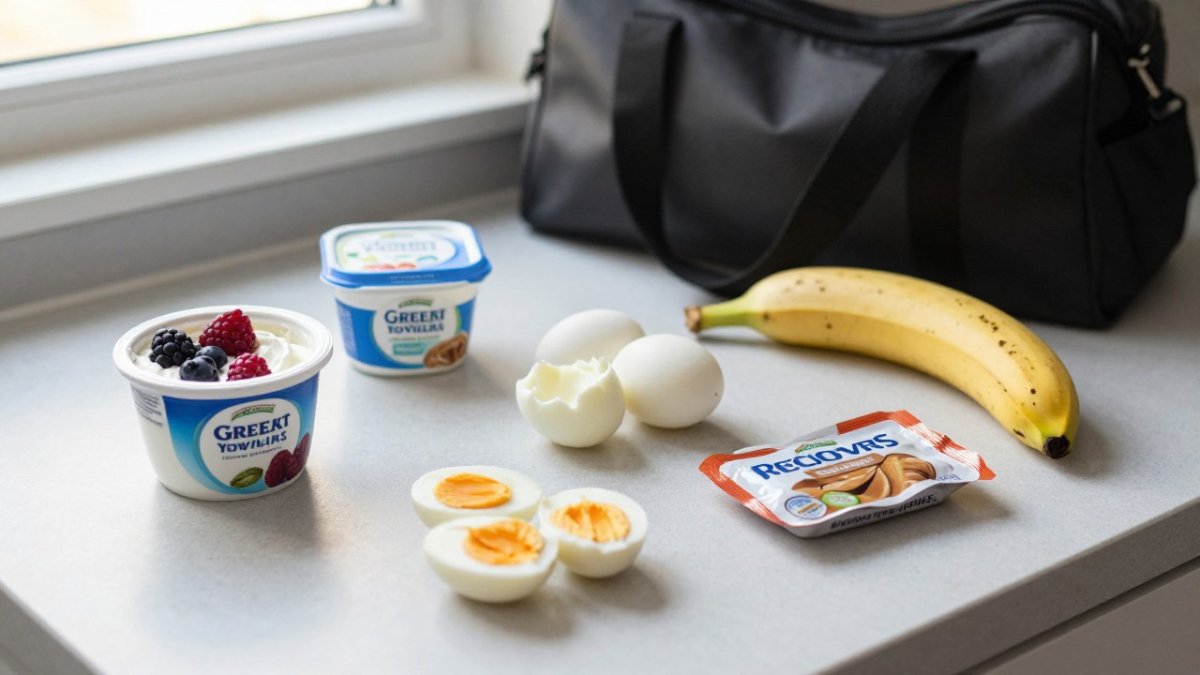
To keep the comparison useful, each snack is also labelled for common dietary needs: V for vegetarian, VG for vegan, DF for dairy-free, GF for gluten-free and NF for nut-free. Where a snack can be adapted, the alternative is named in the entry.
1. Greek Yoghurt with Berries
A 170 g pot of plain Greek yoghurt with 80 g of mixed berries gives roughly 17 g protein and 20 g carbohydrate, around 230 kcal. It needs no preparation beyond a spoon and a fridge. Dairy-free readers can use a soya or pea-protein yoghurt, though protein content is usually lower, so check the label. V, GF, NF.
2. Eggs on Wholegrain Toast
Two boiled or scrambled eggs on one slice of wholegrain bread provide about 16 g protein and 20 g carbohydrate, around 300 kcal. Eggs take five to ten minutes to cook, so this suits a home or office kitchen better than a locker room. V, DF, NF. Swap the bread for a gluten-free slice to make it GF.
3. Chocolate Milk
500 ml of semi-skimmed chocolate milk offers roughly 17 g protein and 50 g carbohydrate, around 330 kcal, and is one of the cheapest ready-made options in UK supermarkets. It is useful when appetite is low straight after hard training. V, GF, NF. Not suitable for lactose-intolerant readers unless lactose-free milk is used.
4. Cottage Cheese with Pineapple
A 200 g tub of cottage cheese with 100 g of fresh pineapple gives around 24 g protein and 15 g carbohydrate, about 200 kcal. It is high in protein for the calories and keeps well in a cool bag. V, GF, NF. Lactose-free cottage cheese is widely available for dairy-sensitive readers.
5. Banana and Protein Smoothie
One medium banana, 300 ml fortified soya milk and a 30 g scoop of whey or plant protein gives about 30 g protein and 40 g carbohydrate, around 380 kcal. It is the fastest option on the list if you own a blender. VG if plant protein and soya milk are used, GF, NF.
6. Tuna on Rice Cakes
A 145 g tin of tuna in spring water with three plain rice cakes gives roughly 30 g protein and 25 g carbohydrate, about 230 kcal. It is the best protein-to-calorie ratio here and works well for weight-conscious training. Tuna is not suitable for vegetarians. DF, GF, NF.
7. Hummus and Wholemeal Pitta
Fifty grams of hummus with one wholemeal pitta gives around 12 g protein, 45 g carbohydrate and 15 g fat, about 370 kcal. It is the most carbohydrate-heavy savoury option and suits long endurance sessions. V, VG, DF, NF. Check pitta labels for gluten if coeliac.
8. Nut Butter Packets with Dried Fruit
A 30 g single-serve nut butter packet with 30 g of dried apricots gives roughly 8 g protein, 25 g carbohydrate and 13 g fat, about 240 kcal. Both keep for months unrefrigerated, so this is the most portable choice. V, VG, GF, DF. Not suitable for nut-free environments such as some gyms and schools.
Watch out: nut butter is calorie-dense, so measure a single portion rather than eating from the jar after training.
Preparation time and cost also differ. Ready-made options such as chocolate milk, tuna and nut butter packets need no preparation and cost the least per serving. Smoothies and eggs on toast take the longest and are the most rewarding when you have time to make them fresh.
The table below sets out the approximate protein and carbohydrate in each snack, so you can compare them at a glance.
| Snack | Protein | Carbohydrate |
|---|---|---|
| Greek yoghurt with berries | 17 g | 20 g |
| Eggs on wholegrain toast | 16 g | 20 g |
| Chocolate milk (500 ml) | 17 g | 50 g |
| Cottage cheese with pineapple | 24 g | 15 g |
| Banana and protein smoothie | 30 g | 40 g |
| Tuna on rice cakes | 30 g | 25 g |
| Hummus and wholemeal pitta | 12 g | 45 g |
| Nut butter packet with dried fruit | 8 g | 25 g |
Protein
Post Workout Snack for Muscle Gain
If your goal is building muscle, the practical question is how much protein you can get into a snack without making it a large meal. Spreading protein over several meals is a common approach.
From the list above, the snacks that come closest to this target without excess calories are the Greek yoghurt pot with berries (around 17 g), the tuna on rice cakes (around 30 g) and the banana and protein smoothie (around 30 g with a whey or plant scoop). Combining two of them, such as yoghurt and a side of eggs, reaches the target more reliably than a single snack.
Post Workout Snack for Weight Loss
When you are trying to lose weight, portion size matters more. Protein-led options such as tuna on rice cakes or Greek yoghurt with berries are one approach to portion-conscious eating.
Supplements Sanctuary stocks Slimanol and NIXOL metabolism support capsules, which are intended to complement a healthy diet and active lifestyle.
What to Eat After a Workout at Night
Training late does not mean you should skip recovery. Choose a lighter snack that is easy to digest, such as cottage cheese with fruit or a small portion of Greek yoghurt. Avoid large, fatty meals close to bedtime.
Torex Gummies, which contain vitamins B6 and B12, are a food supplement option for adult men. Do not take them as a substitute for a balanced evening meal.
Choosing Your Next Recovery Snack
The best recovery snack is the one you will actually eat. Start with two or three options from this list, keep the ingredients to hand, and rotate them so you do not get bored. For most people, a protein and carbohydrate combination eaten within a few hours of training is a reliable foundation.
Find the supplement support that fits your routine. Browse the full range at Supplements Sanctuary and choose the products that suit your goals.
Frequently Asked Questions
What is a good post-workout recovery snack?
A good recovery snack combines protein with carbohydrates in roughly a 1:2 to 1:3 ratio, which helps rebuild muscle and replenish glycogen. Greek yoghurt with berries, eggs on wholegrain toast and chocolate milk are all practical choices. Eat within an hour or two of finishing training, and choose something you can prepare quickly and carry easily.
Do I need protein and carbs after training?
Yes, for most people who train regularly. Protein provides the amino acids needed for muscle repair, while carbohydrates restore the glycogen used during exercise. Eating both together supports recovery more effectively than protein alone, especially after endurance sessions or intense strength work. Portion size should reflect the length and intensity of your workout.
How soon after a workout should I eat a recovery snack?
Eating within one to two hours after training is a sensible target, though the window is less strict than once thought. If you have trained fasted or are doing back-to-back sessions, eating sooner helps. For most people with a main meal due within a few hours, a small snack bridges the gap without spoiling appetite.
What should I eat after a late-night workout?
After a late session, choose a light snack that is easy to digest, such as cottage cheese with fruit or a small Greek yoghurt. Avoid very heavy or high-fat meals close to bed, as they can disrupt sleep. A snack with slow-digesting protein, like cottage cheese, suits evening recovery well.
