

Benefits of UK Manufactured Vitamins: 2026 Guide
Table of Contents
- Why UK Manufactured Vitamins Matter for Your Health
- Vitamin Supplement Quality and Safety Standards in the UK
- Supplement Ingredient Traceability: From Source to Capsule
- How to Choose Vitamins and Supplements with Confidence
- Natural Versus Synthetic Vitamins: What the Evidence Shows
- The Real Cost of Quality: Why UK-Manufactured Supplements Cost More
- Frequently Asked Questions
Last Updated: October 14, 2026
Why UK Manufactured Vitamins Matter for Your Health
When you buy a supplement, you're making a decision about what goes into your body. That decision deserves more than a glance at the label. UK manufactured vitamins represent a commitment to standards that go beyond what many international producers offer. At Supplements Sanctuary, we've built our entire business around this principle: transparency, traceability, and rigorous quality control aren't marketing angles, they're the foundation of what we do.

The difference between a UK-manufactured supplement and one made elsewhere often comes down to regulatory oversight and manufacturing accountability. The UK operates under some of the strictest food supplement regulations in the world, aligned with EU standards that have been refined over decades. This means every batch is subject to verification protocols that catch inconsistencies before products reach shelves. When you choose UK manufactured vitamins, you're choosing a product made in a system where manufacturers are answerable to regulators who take their job seriously.
Most consumers don't realise how much variation exists in the supplement industry globally. Some regions have minimal oversight. Others rely on self-certification. The UK approach is different: it demands documented proof at every stage, from raw material sourcing through to final capsule. This isn't theoretical protection, it's a practical safeguard built into how facilities operate.
Vitamin Supplement Quality and Safety Standards in the UK
The UK maintains strong frameworks for supplement safety that most buyers never see. These standards exist because regulators understand that supplements sit in a unique position: they're not medicines, but they're also not casual consumer goods. They're products people consume specifically for health benefits, which means the bar for quality has to be genuinely high.
ISO Certification and Manufacturing Excellence
Manufacturing facilities in the UK that produce supplements must meet ISO 9001 and ISO 22000 standards. These certifications aren't decorative, they represent audited, documented proof that a facility operates consistent processes, maintains proper documentation, and has systems in place to catch and correct problems. ISO 9001 focuses on quality management systems overall. ISO 22000 specifically addresses food safety, which directly applies to supplements.
When a facility holds these certifications, it means independent auditors have inspected operations, reviewed procedures, and verified that the facility actually follows what it claims to follow. This happens repeatedly, certifications require ongoing compliance, not a one-time approval. Supplements Sanctuary operates in ISO 9001 and ISO 22000 certified facilities, which means every product we manufacture has been produced under these verified systems.
The practical impact is measurable. Certified facilities maintain detailed batch records, ingredient tracking systems, and quality testing protocols. If a problem emerges, auditors can trace exactly where it occurred and why. This traceability protects both manufacturers and consumers.
Compliance with UK and EU Food Supplement Regulations
The UK Food Standards Agency and the European Food Safety Authority set the regulatory framework that governs supplements. These regulations define what can be claimed on labels, what ingredients are permitted, what contaminant levels are acceptable, and how facilities must operate. A supplement sold in the UK must comply with these standards regardless of where it's manufactured, but UK-based producers operate under direct regulatory oversight.
This compliance requirement means manufacturers must maintain documentation proving their products meet specified standards. Ingredient sourcing must be traceable. Labelling must be accurate. Contamination testing must be performed and recorded. None of this is optional; it's built into the regulatory structure.
When you purchase from a UK manufacturer, you're buying from a business that operates within a system where non-compliance carries real consequences. Regulators can inspect facilities, request documentation, and take action if standards aren't met. This creates accountability that extends beyond what many international producers face.
Supplement Ingredient Traceability: From Source to Capsule
Knowing where your supplement ingredients come from matters more than most people realise. A supplement is only as good as its ingredients, and ingredients are only trustworthy if you can verify their origin and quality. This is where traceability becomes essential.
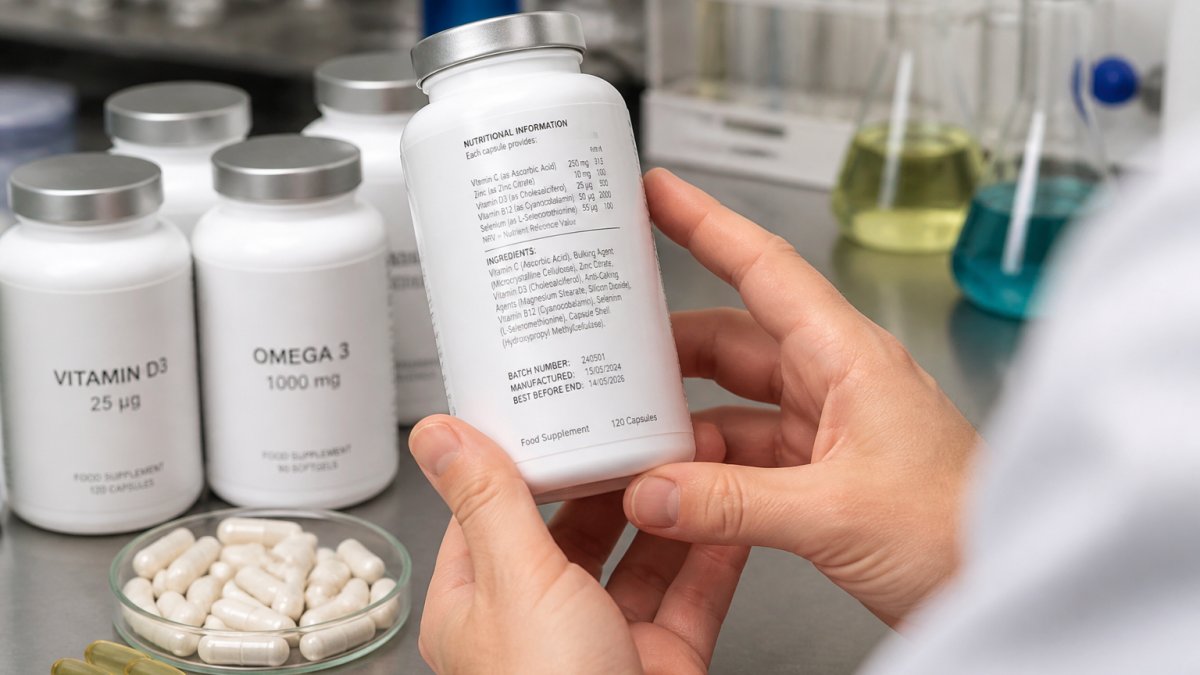
Traceability means you can follow an ingredient backward from the finished capsule to its original source. A UK manufacturer maintains this chain through documentation: supplier certificates, batch records, testing reports, and quality assurance logs. When Supplements Sanctuary produces a batch, every ingredient in that batch is documented. We know which supplier provided it, when it arrived, what testing confirmed its quality, and which finished products contain it.
This matters because ingredient quality varies significantly. Two suppliers might both sell "zinc citrate," but one might maintain stricter purity standards than the other. One might source from a region with rigorous agricultural oversight; another might not. Without traceability, you can't distinguish between them. With it, manufacturers can select suppliers who meet their standards and prove it through documentation.
The real value of traceability emerges when questions arise. If a customer asks where their specific batch came from, a manufacturer with proper systems can answer with precision. They can show test results, supplier information, and manufacturing dates. This transparency builds confidence because it's verifiable, not just a claim, but documented proof.
How to Choose Vitamins and Supplements with Confidence
Choosing a quality supplement requires looking beyond marketing language. The information you need is usually available; it's just a matter of knowing what to look for and where to find it.
Reading Labels and Understanding Ingredient Lists
A proper supplement label tells you what's actually in the product. It lists each active ingredient with its amount per serving, measured in standardised units (milligrams, micrograms, or percentages of nutrient reference values). This clarity matters because it allows you to compare products objectively and verify you're getting what you expect.
The ingredient list on a supplement label should be specific. Instead of "herbal blend," it should name each herb and its quantity. Instead of "mineral complex," it should list individual minerals with their amounts. This specificity exists for a reason: it allows you to cross-reference against your other supplements or medications to avoid duplication or interactions.
Look for labels that include batch numbers and manufacturing dates. These details indicate a manufacturer confident enough in their traceability to put this information directly on packaging. Batch numbers connect the product you're holding to the specific production run, quality testing, and documentation that backs it up.
R+ Macronutrient Metabolism – With Zinc, Chromium & Guarana – 30 Capsules →
What to Look for in Batch Traceability
When you buy a supplement with a batch number, that number should be traceable. Some manufacturers make batch information available through their website or customer service. Others provide it on request. The willingness to provide this information, and the ease with which they do it, signals how seriously they take transparency.
Batch traceability documentation typically includes testing results confirming that the batch meets specified standards for purity and potency. It may include microbial testing (to verify the batch is free from harmful bacteria), heavy metal testing (to confirm contaminant levels are within acceptable ranges), and potency testing (to verify the product contains the stated amount of active ingredients).
When you can access this information, you're not relying on trust alone. You're verifying the product through documented evidence. This is the standard that UK manufacturers increasingly provide, and it's worth seeking out.
Natural Versus Synthetic Vitamins: What the Evidence Shows
The natural-versus-synthetic debate in supplements often generates more heat than light. Both forms can be effective; the distinction matters less than people typically assume.
Synthetic vitamins are chemically identical to their natural counterparts. Your body processes them the same way. The advantage of synthetic vitamins is consistency, they're produced under controlled conditions, so every batch contains precisely the stated amount. Natural vitamins, derived from food sources, can vary in potency depending on growing conditions and extraction methods.
This doesn't mean natural is inferior or synthetic is superior. It means they have different characteristics. A synthetic vitamin offers predictability. A natural vitamin may offer additional compounds from its source material, though whether these compounds provide additional benefit varies by situation.
What matters more than the natural-versus-synthetic distinction is whether the product is accurately labelled and properly tested. A synthetic vitamin that's mislabelled is worse than a natural vitamin that's accurately documented. A natural vitamin that hasn't been tested for contaminants is riskier than a synthetic one that has.
UK manufacturers typically use both synthetic and natural ingredients, selecting based on what delivers the most reliable result for each specific nutrient. The focus is on accuracy and safety, not on adhering to a natural-only or synthetic-only philosophy.
The Real Cost of Quality: Why UK-Manufactured Supplements Cost More
Quality supplements cost more than budget alternatives, and there are tangible reasons why. Understanding these reasons helps you evaluate whether the price difference represents genuine value or unnecessary markup.
Certified manufacturing facilities, batch testing, ingredient verification, and regulatory compliance all carry costs. A facility maintaining ISO 9001 and ISO 22000 certification must undergo regular audits, maintain detailed documentation systems, and implement quality control procedures. These investments aren't optional extras, they're embedded in how the facility operates.
Raw materials sourced from verified suppliers with documented quality standards typically cost more than materials bought on open markets with minimal verification. A zinc citrate supplier who maintains rigorous purity testing and provides certificates of analysis charges more than a supplier with minimal oversight. The difference in price reflects the difference in assurance.
Batch testing adds measurable cost. Every batch of a properly manufactured supplement should be tested for potency (to confirm it contains the stated amount of active ingredients) and for contaminants (to verify it's free from harmful substances). This testing requires specialised equipment and trained personnel. It's an expense that directly impacts the final product price.
When you compare a UK-manufactured supplement to a cheaper alternative, you're not just comparing ingredients, you're comparing the entire system behind it. The cheaper product may contain the same active ingredients, but it may lack the documentation, testing, and regulatory oversight that backs the more expensive option. For consumers concerned about safety and accuracy, that difference justifies the cost.
Choosing supplements means choosing trust. When you select UK manufactured vitamins, you're selecting a product made within a system designed to verify what's actually in the bottle. Supplements Sanctuary produces every batch in ISO 9001 and ISO 22000 certified facilities with full batch traceability, UK and EU regulatory compliance, and rigorous quality testing. Every product carries documented proof of its ingredients and manufacturing process.
Frequently Asked Questions
Are UK-manufactured vitamins genuinely better quality than imported alternatives?
UK-manufactured vitamins produced in ISO 9001 and ISO 22000 certified facilities meet stricter quality standards than many international competitors. The UK requires manufacturers to comply with food supplement regulations that mandate ingredient verification, batch testing and clear labelling. This means you know exactly what's in each capsule. Imported supplements may meet basic safety standards, but UK production ensures consistent oversight and traceability from raw material sourcing through to final packaging.
How can I verify that supplement ingredient traceability claims are genuine?
Reputable UK manufacturers publish batch numbers on every bottle and can trace each ingredient back to its source. Ask the brand directly for batch test results and supplier documentation. Legitimate companies like Supplements Sanctuary, established since 2014, maintain detailed records and can show you where specific capsules came from. Check the label for ISO certifications, batch numbers and contact details. If a brand refuses to provide this information or makes vague claims about traceability, that's a red flag.
What quality standards should I look for when choosing vitamins and supplements?
Look for ISO 9001 (quality management) and ISO 22000 (food safety) certification on the label. Check that the product complies with UK and EU food supplement regulations. Verify the manufacturer lists all ingredients with quantities and nutrient reference values. Batch numbers should be visible on the bottle. The brand should publish customer ratings and have been trading for several years, demonstrating consistent quality. Avoid supplements with vague ingredient lists or missing manufacturing information.
Is there a real difference between natural and synthetic vitamins?
Both natural and synthetic vitamins can be effective, but the quality depends on sourcing and manufacturing, not the origin alone. Synthetic vitamins are chemically identical to natural ones and may offer better stability and consistency. Natural extracts like guarana or Siberian ginseng in UK-manufactured supplements are valued for their additional plant compounds. The real advantage of UK manufacturing is rigorous testing of both natural and synthetic ingredients to ensure purity, potency and safety, regardless of source.