

Buy Vitamin D3 Capsules: What to Know First
Table of Contents
- Why So Many Adults in the UK Are Low on Vitamin D
- Vitamin D3 Dosage for Adults: Getting the Amount Right
- Vitamin D3 Absorption With Food: Does It Really Matter?
- Best Time of Day to Take Vitamin D3
- What to Look for When You Buy Vitamin D3 Capsules
- Common Questions Before You Buy Vitamin D3 Capsules
- Choosing Vitamin D3 Capsules From Supplements Sanctuary
- Conclusion
Last Updated: August 27, 2026
Why So Many Adults in the UK Are Low on Vitamin D
Vitamin D deficiency is far more common in the UK than most people realise. The UK sits at a latitude where sunlight between October and March lacks sufficient UVB radiation for the skin to produce meaningful vitamin D. Combined with indoor working patterns, sun protection habits, and the scarcity of naturally vitamin D-rich foods, the UK population faces a structural nutritional gap during winter.
According to NHS guidance on vitamin D, the NHS recommends that everyone in the UK consider taking a vitamin D supplement during autumn and winter. For older adults, people with darker skin, and those with limited outdoor time, year-round supplementation is advised. This is mainstream public health guidance, not a wellness trend.
Here at Supplements Sanctuary, the distinction between vitamin D2 and D3 matters: vitamin D3 (cholecalciferol) is the form the body synthesises from sunlight and is more effective at raising and sustaining blood levels than D2. Most high-quality supplements use D3, and it is the form you should seek.
Below, we cover dosage, timing, absorption, and what to look for on the label.
Vitamin D3 Dosage for Adults: Getting the Amount Right
The right vitamin D3 dosage depends on your starting point, health goals, and any existing deficiency.
NHS Guidance and What It Actually Means for You
The NHS vitamin D supplement recommendations suggest 10 micrograms (400 IU) per day as a general maintenance dose for adults during autumn and winter. This is a public health minimum, not a clinical target for someone with confirmed deficiency.
For many adults already low in vitamin D, 400 IU is unlikely to restore levels to an optimal range. It may maintain borderline-sufficient levels but will not meaningfully correct a deficiency developed over months or years.
Higher-Dose Capsules: When They Make Sense
Higher-dose vitamin D3 capsules, typically 1,000 IU to 4,000 IU per day, are commonly used by adults with confirmed low levels or risk factors for deficiency. Many GPs advise a higher dose over a defined period to correct deficiency before dropping to maintenance.
The Scientific Advisory Committee on Nutrition vitamin D report consensus is that doses up to 4,000 IU daily are generally safe for most adults without medical supervision, though anyone with health conditions or taking medication should consult a GP first.
Vitamin D is fat-soluble and accumulates in the body rather than being excreted. Very high doses over extended periods can lead to toxicity, though this is rare at standard supplement levels.
| Dose | Who It Suits | Typical Use Case |
|---|---|---|
| 400 IU (10 mcg) | General adult population | Autumn/winter maintenance |
| 1,000 IU (25 mcg) | Those with limited sun exposure | Year-round support |
| 2,000 IU (50 mcg) | Adults with confirmed low levels | Corrective phase under GP guidance |
| 4,000 IU (100 mcg) | Higher-risk groups, athletes | Short-term correction, supervised |
Vitamin D3 Absorption With Food: Does It Really Matter?
Taking vitamin D3 capsules with food makes a meaningful difference to absorption. Vitamin D is fat-soluble and requires dietary fat to be absorbed properly through the gut wall into the bloodstream.

Research from National Institutes of Health Office of Dietary Supplements confirms that vitamin D absorption is significantly higher when taken with a meal containing fat compared to a fasting state. The type of fat matters less than its presence.
Take your vitamin D3 capsule with breakfast, lunch, or dinner rather than on an empty stomach. A meal containing eggs, avocado, nuts, or olive oil will suffice. You do not need a high-fat meal, just one with some fat content.
This is one of the simplest optimisations you can make. Many people take vitamin D3 capsules first thing with only water or black coffee and wonder why levels remain low. The answer is often absorption, not dose.
Best Time of Day to Take Vitamin D3
The best time to take vitamin D3 is with your largest meal, typically lunch or dinner. This maximises absorption through fat co-ingestion and fits naturally into an existing routine.
Some people report that evening supplementation interferes with sleep, possibly because vitamin D plays a role in melatonin regulation. If this affects you, shift to a morning or midday dose with food.
The most important factor is consistency. A daily dose taken at the same time with food outperforms an irregular higher dose. Build it into a meal you already eat reliably.
What to Look for When You Buy Vitamin D3 Capsules
The supplement market in the UK is large and variable in quality. The label and manufacturer's practices tell you far more than price.
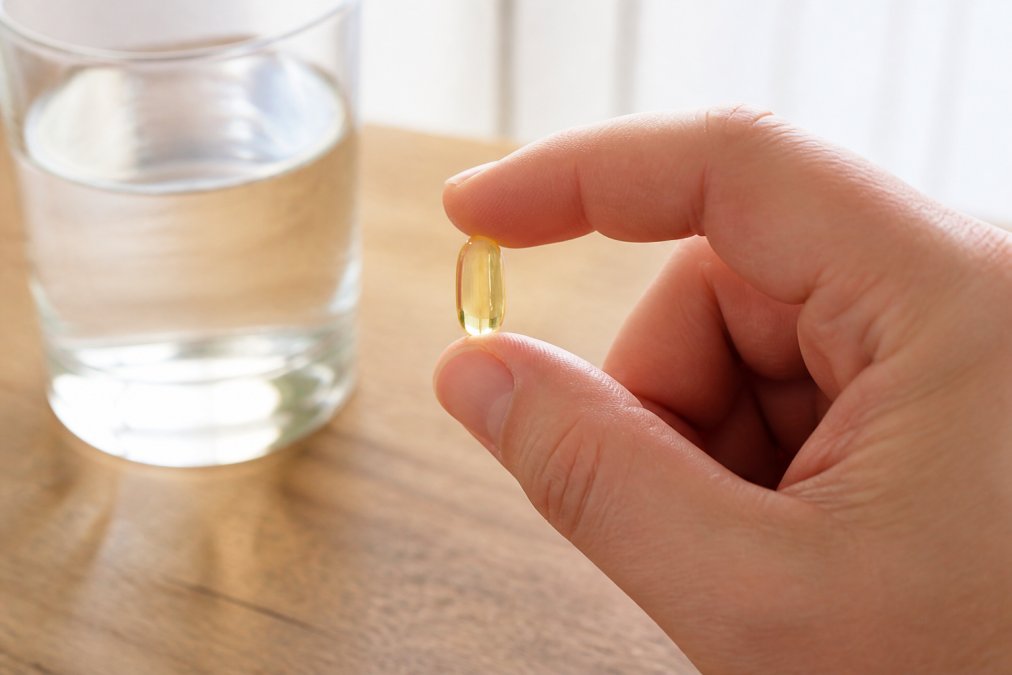
Look for cholecalciferol (vitamin D3) rather than ergocalciferol (D2). Check that the dose is clearly stated in both micrograms and IU. Review the excipients for dietary suitability, vegetarian, vegan, or allergen-free options.
The manufacturer's quality credentials separate genuinely reliable products from those that merely look the part.
Batch Traceability: More Than a Marketing Claim
Batch traceability allows you to trace every raw material back to its source, lot by lot. This is not standard across the industry. If a raw material is later found contaminated or mislabelled, batch traceability enables the manufacturer to identify exactly which products are affected and act quickly.
This addresses documented risks of heavy metal contamination or ingredient mislabelling in supplements.
UK Manufacturing and Regulatory Compliance
UK-manufactured supplements are subject to food supplement regulations governing labelling accuracy, permissible ingredients, and manufacturing standards. This regulatory environment directly affects production oversight.
Products manufactured outside the UK may be subject to different standards or less consistent application. Look for evidence of compliance with UK and EU food supplement regulations, not just general quality claims.
Common Questions Before You Buy Vitamin D3 Capsules
Is vitamin D3 the same as vitamin D?
Vitamin D3 (cholecalciferol) is one form of vitamin D. It is produced naturally in human skin in response to UVB sunlight and is most commonly used in high-quality supplements. Vitamin D2 (ergocalciferol) is the other main form. Both are converted to active vitamin D in the body, but D3 is generally more effective at raising blood levels.
How long does it take for vitamin D3 capsules to work?
Blood levels typically begin rising within weeks of consistent supplementation, but meaningful increases usually take two to three months. A follow-up test after three months gives a realistic picture of progress.
Can I take too much vitamin D3?
Yes, though toxicity from standard supplements is rare. Doses below 4,000 IU per day are generally safe for most adults. Very high doses over extended periods can cause hypercalcaemia. Consult a GP before considering doses above 4,000 IU. NHS on vitamin D safety covers this in detail.
Do I need a blood test before starting vitamin D3?
A blood test is not required before starting a standard maintenance dose, but it is useful to understand your baseline and track progress. GPs can arrange a 25-hydroxyvitamin D test, and private testing is available. Testing is particularly worthwhile if you have symptoms consistent with deficiency, such as persistent fatigue, bone pain, or frequent illness.
Can vegetarians and vegans take vitamin D3 capsules?
Traditional vitamin D3 is derived from lanolin (sheep's wool), unsuitable for vegans. Vegan-friendly vitamin D3, derived from lichen, is available. Check the label or product description carefully.
Choosing Vitamin D3 Capsules From Supplements Sanctuary
Supplements Sanctuary has manufactured food supplements in the UK since 2014. Every product is subject to batch traceability for all raw materials, allowing us to account for the origin and quality of every ingredient in every production run.
Our vitamin D3 capsules comply with UK and EU food supplement regulations with clear, accurate labelling stating dose in both micrograms and IU. We operate under strict quality-controlled manufacturing conditions. Our average customer rating is 4.75 out of 5, built over more than a decade of supplying health-conscious adults.
The difference is not the vitamin D molecule itself but the manufacturing environment, raw material traceability, and finished product consistency held to a higher standard. That consistency is what makes the difference over months and years of supplementation.
Pricing and full product specifications are available on the Supplements Sanctuary website.
Vitamin D deficiency remains one of the most common and most correctable nutritional gaps in the UK. The challenge is finding a supplement you can trust to contain what it says, at the stated dose, produced under conditions that support that claim. Supplements Sanctuary's UK manufacturing, batch traceability, and ten-year track record address exactly that concern. Browse our range of vitamin D3 capsules and find the dose and format that fits your routine.
Frequently Asked Questions
What is the difference between Vitamin D and Vitamin D3?
Vitamin D is an umbrella term covering two main forms: D2 (ergocalciferol, derived from plants) and D3 (cholecalciferol, derived from animal sources or lichen). D3 is the form your skin produces naturally when exposed to UVB sunlight, and research consistently shows it raises blood levels of 25-hydroxyvitamin D more effectively than D2. When you buy vitamin D3 capsules specifically, you are choosing the form that most closely mirrors what your body makes itself.
How many IU of Vitamin D3 should I take daily?
The NHS recommends 400 IU (10 micrograms) daily for most adults, particularly during autumn and winter. Some adults with confirmed deficiency, limited sun exposure, or specific health goals take higher amounts under guidance from their GP. The correct vitamin D3 dosage for adults depends on your current blood levels, age, body weight, and health status. A blood test from your GP is the most reliable way to establish the right dose for your individual circumstances.
Is it better to take Vitamin D3 with food?
Yes. Vitamin D3 is fat-soluble, which means vitamin D3 absorption with food improves noticeably when there is some dietary fat present. Taking your capsule alongside a meal containing healthy fats, such as eggs, avocado, oily fish, or full-fat dairy, gives your digestive system the fat it needs to absorb the vitamin properly. Taking D3 on an empty stomach or with a fat-free meal reduces how much your body actually takes in.
How can I tell if a Vitamin D3 supplement is genuinely high quality?
Look for supplements manufactured in the UK or EU under recognised food safety standards, with clear labelling that states the exact amount of D3 per capsule in both IU and micrograms. Batch traceability, the ability to trace raw materials back to their source, is a meaningful quality indicator, as it means the manufacturer can verify what went into every production run. A consistent customer rating and a verifiable manufacturing history also signal a brand that stands behind its products.
This article was written using GrandRanker