

Best Magnesium Supplements for Sleep and Anxiety 2026
Last Updated: 22 October 2026
Quick Summary
For sleep and anxiety in 2026, magnesium glycinate is the form most often recommended, taken at roughly 30 to 60 minutes before bed. Start low at around 100-200mg of elemental magnesium daily and build slowly. Choose clearly labelled magnesium supplements that state the form and elemental amount.
- Magnesium citrate is cheaper and absorbs well but can cause loose stools at higher doses.
- Split doses across the day if loose stools occur, a common sign of taking too much at once.
- Check that the label states elemental magnesium, not just the compound weight.
- Ignore proprietary blends that hide individual doses behind one total figure.
- UK rules mean food supplements cannot make medicinal claims such as curing insomnia.
Table of Contents
- Why Magnesium Supplements for Sleep and Anxiety Are Everywhere in 2026
- Magnesium Dosage for Sleep: What the Research Actually Suggests
- Magnesium Glycinate vs Citrate for Sleep: Which Form Suits You?
- When to Take Magnesium for Sleep: Timing That Works
- How to Choose a Magnesium Supplement: A 2026 Buyer's Checklist
- What to Ignore When Buying Magnesium Supplements
- Frequently Asked Questions
Why Magnesium Supplements for Sleep and Anxiety Are Everywhere in 2026
Magnesium supplements have become one of the most searched-for sleep aids in the UK, and the reason is simple: people are tired of feeling wired at bedtime. Demand for magnesium supplements has climbed steadily as customers look for something gentler than a prescription.
The science is more cautious than the marketing. A 2024 review led by A. Rawji examined the evidence on supplemental magnesium and self-reported anxiety and sleep quality and found that while magnesium is hugely popular on social media for these complaints, the clinical picture is not settled. That does not mean magnesium is useless. It means the claims have run ahead of the data.
Here is what most buying guides get wrong: they treat every form of magnesium as interchangeable. It is not. Glycinate, citrate and L-threonate behave differently in the body, and choosing the wrong one for your goal is the fastest way to waste money.
Below, we break down dosage, form, timing and label-reading so you can pick with confidence rather than guesswork.
Magnesium Dosage for Sleep: What the Research Actually Suggests
There is no single official dose for sleep, because magnesium is not licensed as a sleep treatment. UK labelling for food supplements typically points to a daily intake in the low hundreds of milligrams, and the safest approach is to start at the lower end and build slowly.
The research does not give us a clean number. The 2024 review noted above did not establish a reliable effect size for sleep quality, which is why we advise treating dosage as a personal experiment rather than a prescription.
Three practical rules:
- Start low, around 100-200mg of elemental magnesium per day, and hold for a week before adjusting.
- Split doses across the day if you get loose stools, a common sign you have taken too much at once.
- Never exceed the label's upper limit without speaking to a pharmacist or GP.
Magnesium Glycinate vs Citrate for Sleep: Which Form Suits You?
For sleep, magnesium glycinate is the form most often recommended, and the Sleep Foundation's guidance on magnesium for sleep names glycinate as a common choice. Citrate is cheaper and absorbs well, but it pulls water into the bowel, which makes it a poor fit for anyone prone to loose stools.
Here is the honest comparison:
| Form | Best For | Watch Out For |
|---|---|---|
| Glycinate | Sleep, anxiety, sensitive stomachs | Higher cost per dose |
| Citrate | Constipation, budget buyers | Loose stools at higher doses |
| L-threonate | Cognitive focus claims | Thin comparative trial data |
L-threonate appears in sleep recommendations, including products ranked by the Sleep Foundation in 2026, but the supplied research offers no head-to-head trial data showing it beats glycinate for sleep. Treat the premium price with scepticism.
If sleep is your goal and your stomach is sensitive, glycinate is often the sensible default. If you also struggle with constipation, citrate can do double duty.
When to Take Magnesium for Sleep: Timing That Works
Take magnesium for sleep roughly 30 to 60 minutes before bed. That window gives it time to absorb without sitting heavily on a full stomach.
Timing matters less than consistency. A common mistake is taking it randomly, then concluding it "didn't work" after four nights. Magnesium status builds over weeks, not hours.
- Evening dose: best for sleep-focused forms like glycinate.
- Split dosing: morning and evening, if you are taking a higher daily total.
- With food: reduces stomach upset, especially with citrate.
If you take any prescription medication, check with a pharmacist first. Magnesium can interfere with how some drugs are absorbed.
How to Choose a Magnesium Supplement: A 2026 Buyer's Checklist
Choosing well comes down to the label, not the marketing. Use this checklist before you buy:
- Is the form named clearly (glycinate, citrate, L-threonate) rather than just "magnesium"?
- Is the elemental magnesium amount stated, not just the compound weight?
- Does the label show a batch number or traceability reference?
- Is the manufacturer named and based in the UK or EU?
- Are claims free of disease-treatment language, as UK rules require?
- Is there a clear daily dose and upper limit?
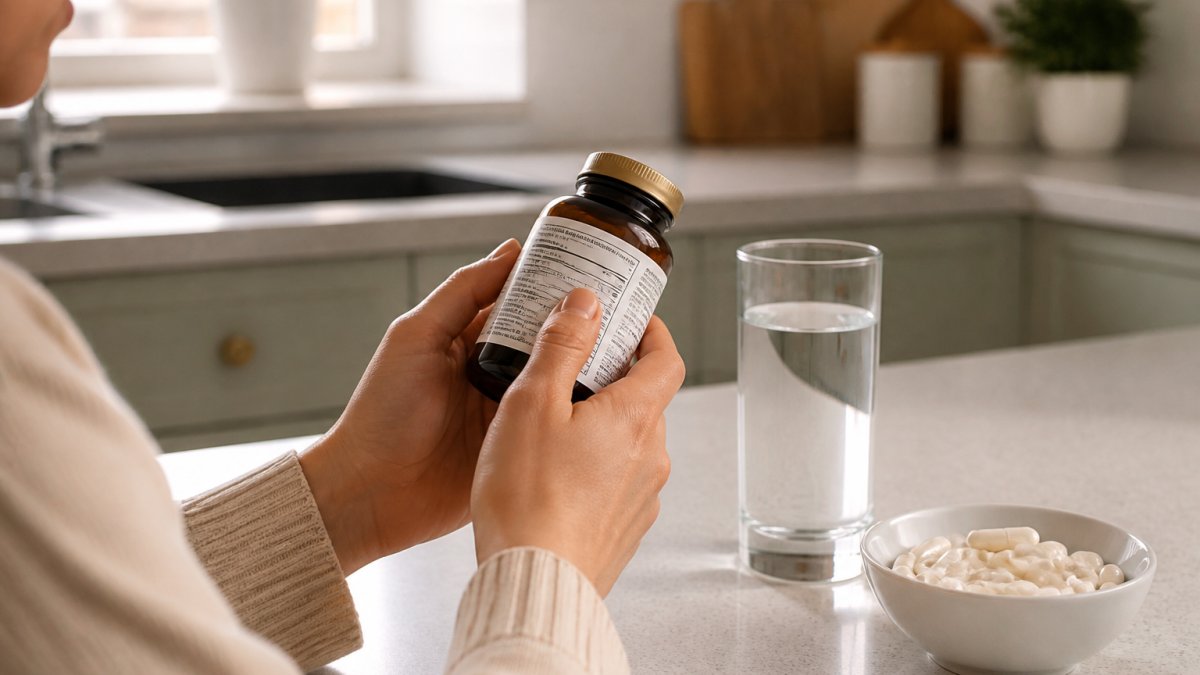
This is where UK manufacturing and batch traceability matter. Supplements Sanctuary produces food supplement capsules in the UK under strict quality control, with batch traceability for all raw materials and compliance with UK and EU food supplement regulations. For a product you take nightly, that paper trail is worth more than a flashy label.
What to Ignore When Buying Magnesium Supplements
Ignore any supplement that promises to cure insomnia or treat anxiety. Under UK rules, food supplements cannot make medicinal claims, so a bottle that does is either non-compliant or overstating its case.
Also ignore:
- Proprietary blends that hide individual doses behind one total figure.
- "Magnesium" with no form named, which tells you nothing about absorption.
- Reviews claiming instant results. Magnesium is not a sedative.
- Imported bargains with no traceability. You cannot verify what you cannot trace.
The 2024 review's cautious tone is the right one. Magnesium may support relaxation for some people, but the evidence for treating anxiety and insomnia is not established, and no honest brand should tell you otherwise.
What you can control is quality: a clearly labelled, UK-made product with a batch number you can trace. That is the standard we hold ourselves to at Supplements Sanctuary.
Frequently Asked Questions
Which type of magnesium is best for sleep and anxiety?
Magnesium glycinate (also called bisglycinate) is the form most often recommended for sleep and anxiety because it is gentle on the stomach and well absorbed. Magnesium citrate is another option, but it can have a laxative effect. Magnesium L-threonate is also appearing in sleep-product recommendations, although the supplied research does not provide comparative trial data. The 2024 review by Rawji and colleagues examined supplemental magnesium and self-reported anxiety and sleep quality but did not establish a clear clinical effect size. Your choice should depend on your digestion and how you respond.
How much magnesium should I take for sleep?
There is no single dosage that suits everyone. The 2024 review on magnesium and sleep quality did not provide a specific outcome estimate, so dosage should be guided by the product label and your own tolerance. Many people start with a lower dose and increase gradually. If you are unsure, speak to a pharmacist or GP, especially if you take medication or have kidney problems. Supplements Sanctuary labels its products clearly so you can see exactly how much elemental magnesium each capsule provides.
Can I take magnesium every night?
Many people do take magnesium nightly, but the research base for long-term nightly use is not established by the supplied search results. The 2024 review describes magnesium's popularity for anxiety and insomnia but gives no clinical conclusion demonstrating that supplements reliably treat these problems. If you plan to take it every night, keep a simple record of how you feel and check with a healthcare professional if you notice any changes. Batch-tested products with clear labelling, such as those from Supplements Sanctuary, make it easier to track what you are actually taking.
Is magnesium glycinate better than magnesium citrate for sleep?
For sleep, magnesium glycinate is frequently highlighted because it is gentle on the digestive system and well absorbed. Magnesium citrate is also absorbed well but can loosen stools, which some people find uncomfortable at night. The Sleep Foundation notes that glycinate is commonly recommended for sleep. That said, the supplied research does not provide head-to-head trial data proving one is superior for sleep outcomes. If you have a sensitive stomach, glycinate is often the more comfortable starting point.
The challenge is not finding magnesium. It is finding a supplier whose label you can trust at 11pm when you are desperate for sleep. Supplements Sanctuary manufactures in the UK, traces every batch of raw material, and complies with UK and EU food supplement regulations, backed by a 4.75/5 average customer rating and over a decade of operation since 2014. Start with our magnesium range and read the label for yourself before you commit to a nightly routine.